
Top 10 Bodyweight Exercises for Fitness Newbies
Starting a fitness journey can be intimidating, especially for beginners. However, bodyweight exercises provide an excellent entry point into fitness routines without needing specialized equipment. These exercises use your body weight as resistance, making them versatile and accessible. They can be performed anywhere — at home, in a park, or a gym. Bodyweight training helps build strength, improve flexibility, and enhance overall fitness levels. Moreover, this approach is perfect for those on a budget since there are no additional costs involved. All you need is your body and a little motivation to get started. It’s crucial for beginners to understand correct form to prevent potential injuries while maximizing effectiveness. Gradually increasing the intensity and volume is key to continued progress. As you incorporate these exercises into your routine, always listen to your body and modify moves as necessary. This ensures sustainable fitness habits that can lead to lifelong health benefits. Whether you aim to lose weight, gain strength, or enhance endurance, bodyweight workouts can be tailored to fit your specific needs and goals. So let’s dive into the top bodyweight exercises recommended for fitness newbies.
1. Push-Ups
Push-ups are a classic bodyweight exercise that primarily targets the chest, shoulders, and triceps. They can be modified to suit any fitness level, making them perfect for beginners. To perform a push-up, start in a plank position with your hands slightly wider than shoulder-width apart. Lower your body towards the ground, ensuring your elbows stay close to your torso. Push back up to the starting position. If standard push-ups are too challenging, consider doing knee push-ups or incline push-ups against a stable surface. As your strength increases, you can gradually work your way up to standard push-ups. Incorporating push-ups into your routine aids in building upper body strength and also engages your core muscles effectively. Start by aiming for sets of five or ten, gradually increasing as it becomes easier. Consistency is key, so aim to include push-ups in your routine two to three times a week. This way, you are setting a strong foundation for your future strength training endeavors. Remember to focus on form, and don’t rush; quality over quantity is essential.
2. Squats
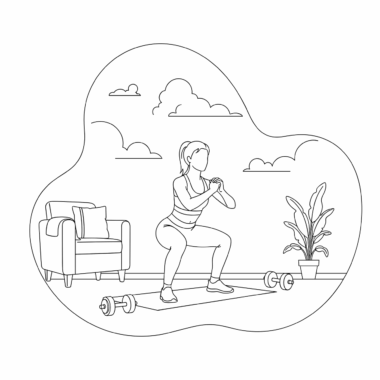
Squats are another fundamental bodyweight exercise that engages multiple muscle groups, including the quadriceps, hamstrings, glutes, and calves. They help improve lower body strength, stability, and flexibility. To perform a basic squat, stand with your feet shoulder-width apart, and lower your hips as if you are about to sit in a chair. Keep your chest up, and your knees should not extend past your toes during the motion. Aim for your thighs to be parallel to the ground for optimal form. Beginners can start with bodyweight squats before adding weights or variations, such as sumo squats or jump squats. It’s important to focus on mastering the correct form before increasing intensity. A common mistake is allowing the knees to cave inward, which can lead to injury. Start with sets of 10-15 repetitions, ensuring you maintain proper posture throughout each squat. Include squats in your workout routine at least twice a week for effective strength development. This exercise not only strengthens your legs but also helps improve balance and coordination over time.
3. Lunges
Lunges offer another fantastic way to strengthen the lower body. They target the quadriceps, hamstrings, and glutes while also enhancing balance and coordination. To execute a lunge, begin by standing tall, feet hip-width apart. Step one leg forward, bending both knees to lower your body. Ensure that your front knee is above your ankle and your back knee hovers just above the floor. Push through your front heel to return to the starting position, then repeat on the opposite leg. Beginners can start with static lunges or walking lunges to increase difficulty gradually. Incorporating lunges into your routine is beneficial for improving functional movements in daily life, such as climbing stairs or walking long distances. Start with three sets of 8-10 lunges per leg, and increase repetitions as you build strength and confidence. Balance is key; therefore, focus on keeping your torso upright and shoulders relaxed throughout the movement. Consistent practice will yield significant strength gains while minimizing the risk of injury.
4. Plank
The plank is an isometric exercise that primarily strengthens the core. It also engages the shoulders, back, and glutes simultaneously, making it an essential part of any workout routine. To perform a plank, lower yourself into a push-up position, then bend your elbows to rest on your forearms. Your body should form a straight line from head to heels. Hold this position, engaging your core and maintaining proper form. Avoid letting your hips sag or rise too high; finding the right alignment is crucial. Beginners should aim to hold a plank for 20-30 seconds, gradually increasing the duration as their strength improves. Additionally, there are many plank variations to add to your routine, including side planks and plank shoulder taps, which can help target different muscle groups. Perform planks two to three times a week for optimal results. Make sure to incorporate them into your workout, as strengthening your core can enhance performance in other exercises and daily activities. Always focus on proper breathing, breathing deeply during the plank will also aid in maintaining engagement.
5. Glute Bridges
Glute bridges target the gluteal muscles, core, and lower back, providing essential strength training benefits. To execute a glute bridge, lie down on your back with your knees bent and feet flat on the floor, hip-width apart. Push through your heels, lifting your hips towards the ceiling while keeping your shoulders and feet grounded. At the top of the movement, squeeze your glutes and hold for a moment before lowering back down. Avoid arching your back; focus on using your glutes and hamstrings to lift your body. Beginners can start with three sets of 10-15 repetitions and increase intensity by adding single-leg variations or holding weights above your hips. Glute bridges are particularly effective for improving hip stability, which is crucial for various athletic activities and everyday movements. Aim to perform this exercise two to three times a week for lasting results. Consistent practice of glute bridges also enhances overall posture and lower back health. They play an essential role in developing functional strength as part of a total body workout routine.
6. Mountain Climbers
Mountain climbers are a dynamic, full-body workout that combines cardiovascular fitness with strength training. They mainly target the core, shoulders, and legs. Begin in a plank position with your hands directly under your shoulders. Quickly raise one knee toward your chest while keeping your core engaged. Return that foot back to the starting position and repeat with the opposite leg, alternating for a continuous movement. The faster you move, the more challenging the exercise becomes, making mountain climbers excellent for building endurance. Beginners can start with a slower pace, focusing on form before increasing speed. Aim for sets of 30 seconds to one minute, taking breaks as needed. Consider incorporating mountain climbers into your warm-up or interval training for maximal effectiveness. This exercise is not only great for burning calories but also boosts heart rate while strengthening your core and lower body muscles. Always ensure your body remains stable and in line during this exercise to prevent injuries. Performing mountain climbers regularly enhances overall fitness and aids in achieving both strength and weight goals.
7. Burpees
Burpees are a challenging, full-body exercise that combines strength and cardio, making them an efficient choice for beginners aiming to enhance fitness levels. To perform a burpee, begin standing tall, then squat down and place your hands on the ground. Jump out to a plank position, perform a push-up if you’re up for it, then jump back towards your hands. Finally, leap into the air, reaching your arms overhead. Burpees can be daunting; however, beginners can simplify the movement by eliminating the push-up or the jump. Starting with sets of five or 10 burpees is ideal, gradually increasing as strength and confidence build. Include burpees in your routine as they effectively build endurance and burn calories. Consistent practice will lead to performance improvements across other exercises. Note the importance of maintaining proper form throughout; reduce speed to focus on technique. Burpees challenge multiple muscle groups, enhancing overall functional fitness. Integrating them into your workouts a few times a week can provide significant cardiovascular and muscular endurance benefits.