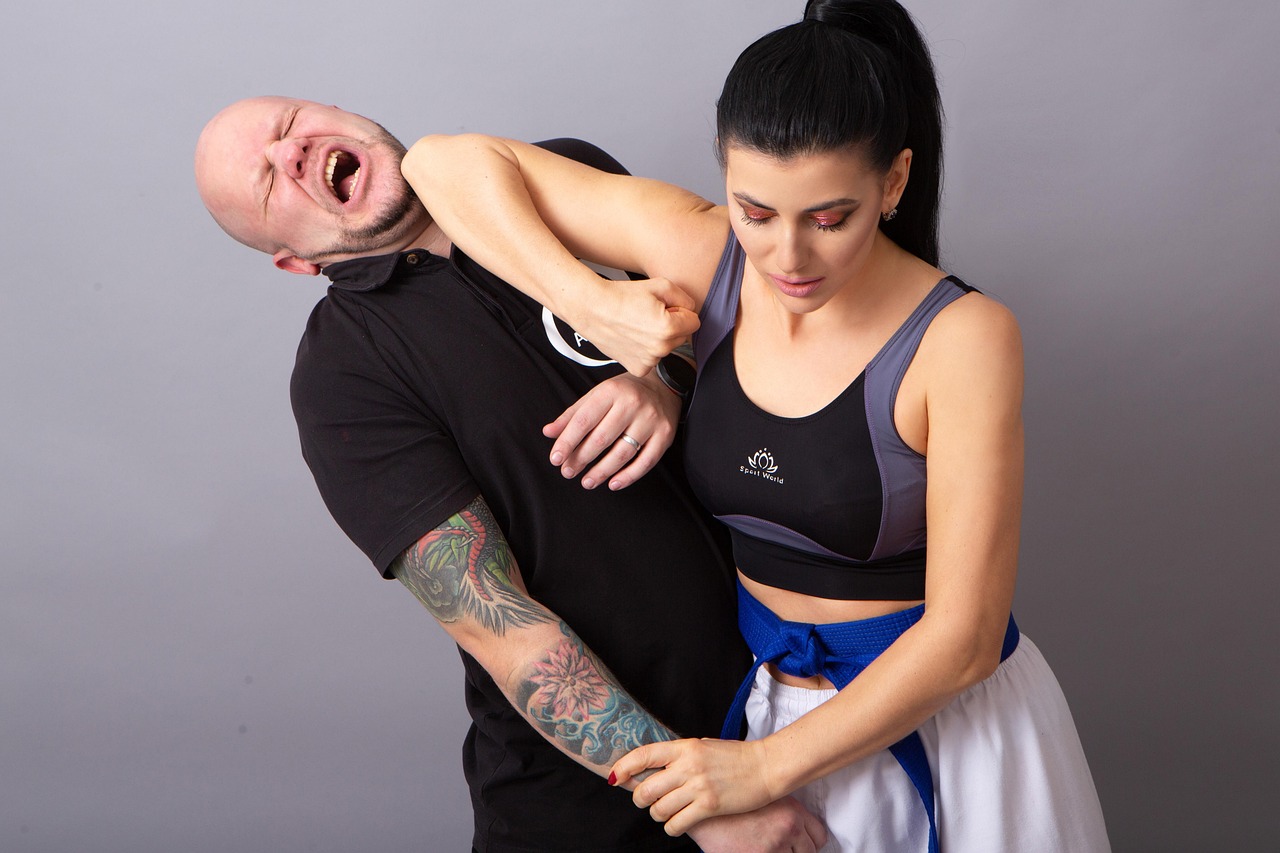

How Cardio Kickboxing Helps Improve Self-Defense Skills
Cardio kickboxing is a dynamic workout that combines martial arts techniques with high-intensity cardio. This powerful fusion helps individuals enhance their self-defense skills effectively. Engaging in cardio kickboxing classes boosts overall fitness, improving strength, agility, speed, and endurance. Not only does this practice provide an effective workout regimen, but it also builds confidence, essential for defending oneself in real-life situations. The training involves various defensive moves, kicks, and punches that simulate actual fighting scenarios, making practitioners more prepared for unexpected encounters. Each class typically features focused drills that emphasize body awareness and muscle memory. Participants learn to throw punches, execute kicks, and perform defensive maneuvers. These skills translate well into self-defense techniques, as they improve reflexes and response times. Moreover, the group environment cultivates a sense of camaraderie, motivating participants to push each other towards their personal fitness goals. As a result, individuals cultivating these attributes through cardio kickboxing become better equipped to shield themselves against potential threats. Therefore, this form of exercise is not solely about physical fitness; it is also a pathway to greater security and readiness in self-defense situations.
The comprehensive nature of cardio kickboxing also plays a crucial role in increasing an individual’s situational awareness. Understanding one’s surroundings is vital in self-defense scenarios. Regular practice encourages participants to remain alert and observant during training, transitions that can extend into everyday life. In a cardio kickboxing class, students learn how to anticipate their opponent’s movements, crucial for effective self-defense. This anticipatory skill set is developed through drills where individuals must predict and react swiftly to attacks during sparring sessions. Students become adept at recognizing patterns in both their own movements and those of their partner, further honing reflexes. As novice athletes gain experience, they build the ability to assess threats quickly, ultimately improving their self-defense skills. Additionally, the benefits extend beyond physicality; mental focus obtained through consistent training reflects a disciplined mindset. This psychological aspect of self-defense cannot be underestimated. Individuals learn to control their emotions under pressure and respond effectively when confronted with confrontation. The importance of remaining calm, making strategic decisions, and executing effectively becomes part of daily practice, contributing significantly to the repertoire required for successful self-defense.
Making connections between fitness and self-defense is vital in today’s society. Learning skillful tactics allows individuals to take ownership of their safety through discipline and practice. As participants undergo rigorous training in cardio kickboxing, they discover effective self-defense strategies. This ensures they not only become physically fit but also mentally resilient, evolving from a well-rounded perspective. By incorporating various martial arts techniques, cardio kickboxing imparts essential skills that are highly applicable in defensive situations. Each session helps practitioners understand how to effectively utilize their body as a tool for self-defense. Furthermore, agility and power developed through kickboxing can translate into real-world self-defense scenarios, whereby speed and strength become critical. Moreover, a strong foundation in kickboxing fosters confidence in self-protection, emphasizing the importance of avoidance whenever possible. The primary goal remains to escape potentially dangerous situations rather than to engage. Learning how to evade rather than retaliate is vital in effective self-defense. With such knowledge, participants can navigate conflicts safely while preserving personal safety. Thus, cardio kickboxing provides an incredible avenue for people to engage actively in their well-being and self-defense preparation effectively.
Building Physical Strength for Defense
Physical strength obtained in cardio kickboxing extends significantly into self-defense training regimes. Through repetitive drills, participants build muscle memory, which sharpens overall coordination and dexterity—vital components in practical self-defense. Kicking, punching, and dodging all contribute to strengthening diverse muscle groups, enhancing overall stability and balance. Each punch must be explosive yet controlled, a skill fostered through countless rounds of practice in class. Similarly, powerful kicks augment leg strength, essential for maintaining solid ground and the ability to maneuver effectively in high-pressure situations. In addition to physical prowess, increased cardiovascular fitness promotes better stamina. This endurance becomes crucial in self-defense scenarios as exhaustion can hinder reaction times. Participants discover that the effort put forth in cardio kickboxing is directly transferable to real-world physical confrontations. Furthermore, engaging in these high-intensity workouts catalyzes weight loss and improved body composition, which may lead to enhanced confidence—an essential aspect of self-defense. This newfound confidence mirrors proficiency during actual confrontational instances, empowering practitioners to feel more secure in their ability to protect themselves efficiently in various situations. Overall, physical preparation is a foundation on which effective self-defense is built through cardio kickboxing.
The mental aspect of self-defense is as critical as physical training, which cardio kickboxing sessions superbly address. During classes, participants not only develop physical fitness but also enhance their mental resilience. Training fosters a strong psychological disposition, allowing individuals to confront fears instilled by the prospect of physical threats. When students partake in an attacking or defensive routine, they gain insight into how to respond effectively under duress. The psychological process of repetition builds confidence as trainee competencies evolve through learning how to handle diverse situations. Moreover, the environment created within kickboxing classes furthers a sense of community. This area fosters psychological safety, where students support one another in overcoming their doubts and challenges. Such bonding not only enriches the training experience but also reinforces social connections vital in crises. In addition, a holistic understanding of one’s capabilities promotes the establishment of personal boundaries—essential knowledge in self-defense contexts. Good preparation elevates situational confidence and the determination to face adversities with courage, fostering resilience that can carry over into everyday life. Ultimately, the combination of mental strength and physical preparedness through cardio kickboxing crafts effective self-defense practitioners.
Developing Quick Reflexes
Quick reflex development represents an intricate component of effective self-defense training through cardio kickboxing. Reflexes are not merely about reaction; they encompass the ability to execute timely responses in unpredictable situations. Throughout cardio kickboxing, movements become reflexive through repetition, enhancing an individual’s ability to respond instinctively in moments of threat. Classes incorporate partner drills and sparring exercises to cultivate these instincts, creating a profound understanding of timing and distance. Increased familiarity with attacks allows participants to respond without hesitation during emergencies. Additionally, the engagement of various senses during training hones reflexes and decision-making by imposing real-time challenges. Practicing with a partner requires constant attention and adaptability, creating an immersive environment conducive to rapid learning. As practitioners become proficient, reactions evolve from deliberate consideration to instinctual responses, comprising key elements of self-defense efficiency. This mastery is achieved through ongoing practice, appreciation of technique, and quick decision-making skills. Ultimately, the development of quick reflexes facilitates a profound sense of preparedness, ensuring that all further skill sets built in cardio kickboxing effectively translate into practical self-defense ability.
Cardio kickboxing ultimately empowers individuals by fostering a sense of autonomy over their safety, equipping them with the necessary skills for effective self-defense. Practicing consistently builds a robust foundation that serves both fitness and personal security aspirations. Furthermore, the engaging class environment emphasizes not just techniques but also the philosophy of awareness, personal limits, and personal responsibility in self-defense situations. Students learn to appreciate their physical capabilities as well as their intrinsic value, fostering respect for themselves and others. Continuous practice encourages the exploration of diverse combinations of moves that refine skills in a functional manner. Additionally, enhanced literacy in body movement is imparted, enabling practitioners to leverage their strengths while identifying weaknesses. This understanding ultimately enhances decision-making abilities under pressure, allowing participants to identify the safest paths during confrontations. The personalization of self-defense training through cardio kickboxing is highly beneficial, as individuals find what works best for their unique styles. This self-exploration becomes empowering, allowing learners to navigate situations with confidence and grace while recognizing their value. In summary, cardio kickboxing effectively combines fitness and self-defense fundamentals, transforming participants into empowered, well-rounded individuals.
In conclusion, cardio kickboxing presents an invaluable method for improving physical fitness and self-defense skills alike. The multifaceted training approach instills essential techniques, situational awareness, and psychological resilience. Through the physicality of the workouts, individuals experience heightened self-esteem while mastering effective self-defense strategies. Each class functions as both a workout and a comprehensive lesson in personal safety, enhancing wellness in various aspects. Furthermore, the supportive community created within the classes further supports personal growth and fosters connections. Participants discover a space where they can openly express concerns and fears surrounding personal safety, often finding companionship among peers in similar predicaments. As individuals engage in cardio kickboxing, they are no longer passive participants but instead active defenders of their well-being. Consequently, this form of group fitness extends beyond its intended purpose as a mere workout, revealing intrinsic values associated with self-defense. Ultimately, regular practice in cardio kickboxing becomes a gateway to greater autonomy, mental fortitude, and physical readiness for any circumstances that may arise, transforming fitness enthusiasts into self-confident, well-prepared individuals capable of swift action in times of need.