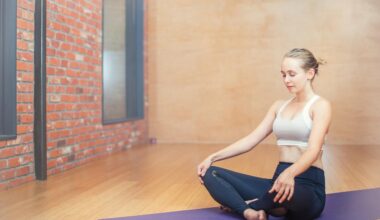

Enhancing Body Awareness for Core Stability Through Mindfulness
Practicing mindfulness in core stability training enhances body awareness significantly. By focusing on the present moment, individuals can fine-tune their movements and improve stability. Mindfulness encourages practitioners to pay close attention to their breathing patterns and bodily sensations. When combined with core exercises, such as pilates and yoga, mindfulness induces a heightened state of awareness. This interconnection fosters balanced muscular engagement, leading to improved posture and less discomfort. Additionally, mindful practices cultivate a sense of self-acceptance, enabling individuals to appreciate their bodies and capabilities. This shift in mindset can be transformative, inspiring a healthier connection to fitness. By concentrating on bodily sensations, participants become more attuned to effective alignment and moves. This adjustment can prevent injuries and promote better performance in fitness classes. To incorporate mindfulness, participants can focus on each muscle contraction, ensuring that they engage the correct muscles. Following this approach, the transformative power of mindfulness can promote deeper connections between mind and body during fitness workouts. Ultimately, prioritizing awareness leads to enhanced performance and personal growth.
Mindfulness techniques allow individuals to slow down and deepen their core stability practice. By engaging in brief moments of reflection, a person learns to recognize distractions and return to their breath. This cycle empowers individuals to regain control when faced with challenging activities. Core stability, essential for overall physical function, benefits tremendously from this approach. Fostering strength in core muscles lays the foundation for more advanced movements and workouts. Mindful awareness during exercises helps individuals develop coordination, enhancing their performance inefficiencies. Reflecting on core workouts encourages a balance among muscle groups, distributing strain evenly and reducing tension. Often, people overlook the central body, which leads to compensatory strategies that can disrupt body mechanics. Practicing mindfulness in fitness encourages engaging the core effectively while allowing for adjustments when needed. It becomes evident that focusing on the present moment yields greater results. Furthermore, mindfulness cultivates a sense of calm, allowing for a more enjoyable fitness journey. Practitioners develop resilience, improve focus, and become more attuned to their capabilities over time. A growing connection between mind and core contributes to lasting physical and mental benefits.
The Role of Breath in Core Stability
A significant component of mindfulness in core stability training involves breath control. Breathing exercises can enhance the awareness of body movements and improve postural alignment. During core workouts, deep, controlled breaths are essential. They facilitate engagement in key muscle groups like the abdominals and lower back. By synchronizing breath with movement, individuals develop greater stability and strength. This practice also encourages relaxation during challenging workouts, reducing mental barriers while enhancing focus. Participants must embrace their breath as a guide throughout the process. Different breathing patterns can be incorporated during various exercises to optimize performance. For instance, inhaling during preparation and exhaling during exertion can promote effective muscle engagement. By noticing how the breath interacts with movements, practitioners create a steady rhythm, leading to improved efficiency. As focus sharpens, enhanced body awareness follows, facilitating an understanding of individual limits and strengths. Increased mindfulness brings about a holistic connection to core stability exercises. Focusing on breath during workouts shifts participants’ attention inward, forging a stronger mind-body connection. Ultimately, enriching breath awareness contributes to overall fitness enhancement and core stability.
Integrating mindfulness into a fitness routine also improves mental health, reinforcing overall well-being. The practice fosters stress reduction, enabling individuals to navigate daily challenges more effectively. Mindful awareness enhances mood and promotes resilience against negative thoughts. Participants can experience the physical benefits of core workouts alongside the mental benefits of mindfulness. Engaging deeply in exercise strengthens not just the core but the mind as well. A well-rounded fitness regime captures more than just physical transformation; it nurtures emotional and mental balance. Individuals who practice mindfulness during workouts report increased feelings of happiness and satisfaction. They tend to form healthier relationships with their bodies, contributing to enhanced self-esteem and confidence. Incorporating mindfulness strategies in fitness encourages body positivity, which can be life-changing. This conscious approach allows individuals to embrace their journey without self-judgment. Mindful movements can offer insights into personal growth, motivation, and the capacity to learn from internal experiences. As participants cultivate patience and acceptance, their connection to core stability deepens, bringing a sense of fulfillment in their practice. The evolution of fitness into a mindfulness-oriented journey yields profound transformation.
Practical Mindfulness Strategies for Core Stability
To implement mindfulness effectively in core stability training, several practical strategies can be adopted. First, practitioners can start with simple breath-focused techniques before commencing core exercises. Beginning each session by taking a moment to breathe deeply can establish clarity and focus, enhancing mindfulness. Afterward, individuals can integrate mindful movements, allowing themselves to reflect on each transition. Another useful approach is the body scan method, where participants mentally check in with each body part. This technique encourages awareness of physical sensations, helping identify which muscles engage during exercises. Progressively, individuals can focus on how their core responds and adjusts as they solidify their movements. Journaling after workouts provides feedback on emotional experiences, which aids in reinforcing mindfulness habits. Additionally, guidance through mindful fitness classes or workshops can enhance practitioners’ skills, providing support and community. Lastly, incorporating mindfulness can benefit overall well-being outside fitness sessions. By maintaining an attitude of presence, people cultivate a balanced lifestyle that nourishes the mind and body. This insight into blending mindfulness with core stability training develops a supportive environment for growth and healing.
Levels of concentration can significantly impact progress in core stability training. Individuals must cultivate their concentration skills to develop deeper awareness. Maintaining focus can help individuals comprehend the nuances of their movements. Concentration builds as mindfulness practice becomes consistent, allowing practitioners to harness attention at crucial moments. By progressively enhancing focus, individuals can fully engage their core muscles, resulting in stronger stability. Developing concentration also incorporates recognizing distractions and intentionally returning attention to present movements. Consistent practice builds resilience, empowering participants to overcome challenges inherently faced in fitness journeys. Mindfulness training is not solely about achieving physical goals; rather, it develops mental fortitude and acceptance. This growth can transcend fitness, becoming invaluable in everyday decision-making. Additionally, working with a mindfulness coach can enhance techniques to further develop concentration. Mindfulness workshops or sessions can introduce tools to help deepen focus while challenging core workouts. As individuals strengthen their ability to concentrate, their core stability improves as well. Connecting with the inner self and present moment during workouts encourages lasting fitness results. Progress may be gradual, but mindful practice aids personal growth, leading to long-term habit formation.
Creating a Mindfulness Routine
To ensure mindfulness becomes integral to your core stability practice, establishing a routine proves beneficial. Consistent timing for workouts helps participants mentally prepare and commit to the practice. One might allocate specific days to focus on mindfulness-infused core stability activities. Scheduling these dedicated sessions fosters a sense of accountability, encouraging adherence to the routine. Emphasizing quality over quantity can help streamline exercises, focusing previously on form rather than speed or volume. Minimal distractions aid consistency in practice, allowing practitioners to engage fully in their workouts. Exploring various mindful movement techniques presents unique challenges and keeps routines fresh and enjoyable. Mindful yoga or pilates integrates muscular engagement with breath, providing a holistic approach to fitness. Adjusting the environment to promote calmness can also enhance training. Utilizing comforting surroundings, such as natural light or soothing music, cultivates a supportive atmosphere for mindfulness. Documenting progress and experiences may also foster motivation and acknowledgment of achievements in core stability practices. Ultimately, creating a routine amplifies connection to fitness, supporting not just physical goals but deeper mindfulness mastery.
Incorporating mindfulness into core stability training has profound effects on both physical strength and mental resilience. As participants engage fully, they observe transformation in how they approach fitness and life situations. This evolution promotes a sense of empowerment as individuals learn to navigate physical challenges with greater ease. Awareness fosters adaptability, leading to healthier responses to stressors that arise. Mindful core stability training can create a safe space for individuals, enhancing their self-compassion while embarking on their fitness journey. As practitioners hold a deeper awareness of their bodies, they develop greater appreciation for their progress. This balanced perspective often leads to sustainable fitness habits free from harsh comparison or impatience. When focusing on core training, the journey becomes enriched by personal insights and growth. Furthermore, prioritizing mindfulness allows individuals to connect deeply with themselves, fostering healthy relationships with their bodies over time. Practitioners may find themselves gravitating towards exercise as a joyful expression rather than a chore. Ultimately, integrating mindfulness into fitness cultivates emotional resilience, which serves well in all aspects of life. The culmination of both physical and mental well-being inspires others to explore the transformative journey of mindfulness in core stability training.