
Advanced Tai Chi Forms for Enhanced Coordination
Advanced Tai Chi forms are not just about executing movements; they focus on enhancing balance and coordination. This practice combines ancient wisdom with physical agility. It offers numerous health benefits proven through research. Engaging in Tai Chi enhances mental clarity, stress relief, and improves overall physical health. Its slow, flowing movements help cultivate stability while grounding you in the practice. As you deepen your understanding, the mind-body connection becomes stronger. Attention to posture significantly influences balance. Precision in movement enhances coordination while minimizing the risk of injury. A strong foundation in basic Tai Chi forms is essential before advancing to more complex routines. Practicing regularly results in pronounced benefits over time. Incorporating breathing techniques enhances the overall experience. In addition, focusing on mindful movements helps align body and mind effectively. As you transition into advanced forms, patience is crucial to developing finesse. Guidance from a skilled instructor ensures proper execution, elevating the practice quality. Remember to embrace this journey as a holistic approach to well-being through balance and coordination. The journey through advanced Tai Chi forms is rewarding and enriching.
Mastering coordination in Tai Chi involves various techniques that enhance balance and fluidity. One key aspect is the incorporation of footwork. Footwork entails understanding the distribution of weight throughout the body during transitions. Moreover, practicing stepping correctly allows the practitioner to maintain stability while executing movements. Each step must be intentional, ensuring that the feet connect firmly with the ground. Additionally, incorporating arm movements plays a significant role in supporting overall coordination. Arms should move in harmony with the legs, creating synchronized patterns. This synergy enhances both balance and graceful movement. Visualizing your body’s center of gravity aids in maintaining equilibrium during transitions between poses. Engaging in partner exercises can further assist in developing coordination. Practicing with a partner may allow one to experience different styles and responses to movements. Purposeful practice promotes responsiveness and fluidity, vital for advanced forms. Attending classes focused on these specific techniques can be incredibly beneficial. As your journeys unfold through practice, expectations should be realistic. Maintaining an open spirit fosters growth and enjoyment in the learning process. Tai Chi is as much a mental exercise as it is a physical one, crafting a harmonious experience.
Techniques for Enhanced Balance
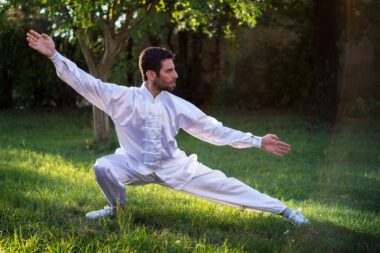
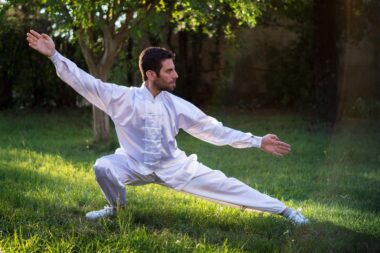
Various techniques exist within advanced Tai Chi forms that contribute to enhanced balance. One notable approach is centering. Centering refers to finding your body’s core and focusing on stability. Particularly when transitioning from one posture to the next, centering is essential. Additionally, practicing stances such as the ‘Horse Stance’ greatly aides in building stability. The Horse Stance improves strength and flexibility in the legs, cultivating endurance. Gradually integrating dynamic movements with static postures fortifies overall balance. This approach reinforces the practitioner’s awareness of body alignment. Furthermore, integrating breath control into each movement enhances intentionality in practice. Stabilizing breath during forms helps ground the practitioner, enhancing focus. Visualization techniques are pivotal as well. Visualizing a point of reference can assist in stabilizing body movements. Tai Chi emphasizes relaxation, thus ensuring muscles remain loose allows for fluid motions. Partner drills focusing on balance create opportunities for practical applications. Practitioners can also explore varying terrains to challenge stability. Each component can contribute significantly to an individual’s overall practice. Developing an awareness of balance encourages a positive attitude, showing that learning is an ongoing journey in Tai Chi.
As you advance in Tai Chi, staying aware of your environment becomes increasingly significant. Environmental factors influence bodily movements, posing unique challenges. Practicing outdoors may expose you to differing surfaces and elements. Understanding these stimuli can strengthen your adaptability, vital for coordination. For instance, performing Tai Chi under varied weather conditions sharpens focus and resilience. This practice instills a sense of connection with nature, while simultaneously improving coordination. Additionally, understanding spatial awareness within your surroundings allows for smoother transitions. Practicing in a confined area stimulates challenges that urge growth. Engaging in Tai Chi with music can also enhance concentration and rhythm. The beat of music can guide your movements, reflecting the essence of tai chi flow. To enhance your practice, explore varied settings for training, and invite feedback from seasoned practitioners. This openness nurtures an improved understanding of form execution. Setting personal goals within your practice fosters accountability, encouraging consistent progress. The journey invites exploration and adaptability in mastering advanced forms. Share experiences within the Tai Chi community; learn from fellow practitioners’ insights and techniques. Every engagement enriches the overall understanding of balance and coordination.
The Role of Mindfulness in Tai Chi
Mindfulness plays a crucial role in the advancement of Tai Chi practice. Concentration is key in mastering forms, guiding the practitioner towards deeper understanding and execution. Each movement must be deeply focused, enhancing the mind-body connection. Cultivating mindfulness promotes awareness of bodily sensations and feelings throughout the practice. This develops a stronger connection and improves coordination. As practitioners advance, they should prioritize clarity in thought. Mindfully approaching forms and techniques invites more profound experiences. This attentiveness extends beyond physical awareness; emotional and mental insights can arise. Regularly reflecting on practice can result in valuable insights for personal development. Additionally, breathing exercises within Tai Chi help ground the practitioner. Breath is central to the rhythm of movements, ensuring a seamless flow. Advanced forms often require a composed mindset, achieved through mindfulness. Incorporating visualizations promotes further focus during practice. Practitioners may visualize energy flowing through their body during execution. Such techniques cultivate a stronger sense of balance and fluidity. In moments of stress, revisiting mindfulness practices can alleviate tension, enhancing overall performance.
As you delve into advanced Tai Chi forms, consider incorporating props for enhanced coordination. Elements such as Tai Chi balls or fans provide additional challenges, encouraging deeper focus and control. These tools necessitate adaptation, honing coordination as you balance traditional form execution with the added complexity. Practitioners working with fans develop wrist and hand strength, proving beneficial for a steady grip and balancing motions. The dynamic nature of prop practice fosters creativity while allowing personal expression in movement. Additionally, Tai Chi swords allow for expansion of range and unique forms, inviting practitioners to explore their capabilities. Experimenting with such tools encourages growth in both familiarity and confidence in practice. Introducing these elements challenges the mind and encourages adaptation to diverse conditions. Community classes or workshops can provide new insights and methods while engaging with new tools. Explore local environments for opportunities to practice with materials that inspire you. The motivation gained from innovative practice invigorates everyday training routines significantly. Remember to approach prop use with a patient mindset, as mastery takes time, enriching your Tai Chi journey.
Conclusion: The Journey Ahead
Embarking on the journey to master advanced Tai Chi forms requires dedication, consistent practice, and a commitment to self-improvement. Balancing the intricate dynamics between breath, movement, and awareness deepens understanding. Additionally, integrating communication with fellow practitioners can enhance the collective learning experience. The journey is an ongoing exploration of balance and growth tailored uniquely to each practitioner. Maintaining a positive mindset encourages persistence, as progress may take time. Every challenge leads to unexpected insights, urging personal advancement. Regular practice transforms mindsets, instilling resilience and strength, both physically and mentally. Embrace the journey as an opportunity to discover the art within balance and coordination. Explore local classes or groups that resonate with your practice goals; learning from diverse perspectives can enhance your journey. As dedication grows, personal observations will reveal the profound effects of Tai Chi on overall well-being. Celebrate achievements within practice, be they small or monumental; each one contributes to the journey. The pursuit of advanced Tai Chi forms melds body and spirit, creating a holistic practice that continues to evolve. This practice ultimately nurtures connection, balance, and tranquility.