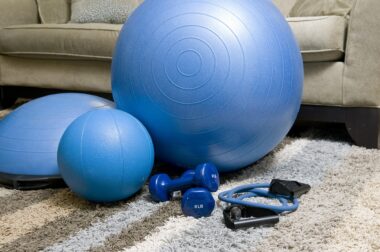

Functional Lower Body Training with Resistance Bands
Resistance bands are versatile tools that can enhance lower body workouts significantly. They provide stability, support, and an effective way to strengthen various muscle groups. Lower body strength is crucial for everyday activities such as walking, running, and climbing stairs. Resistance bands also allow you to perform a wide range of exercises that target glutes, quads, hamstrings, and calves. Using these bands can help improve strength, balance, mobility, and flexibility. When you incorporate resistance bands into your routine, you can also enhance your athletic performance. As they come in various resistance levels, users can choose bands that best fit their strength and comfort levels. By adjusting your stance and grip, you can increase the intensity and discover new challenges. Resistance bands can also easily be combined with other workout routines for a total body workout. Moreover, they’re portable and can be used anywhere, making it easy to stay consistent. Any fitness journey can benefit from these bands, regardless of experience level or age. Start incorporating resistance bands today to reap the rewards of functional fitness.
Functional fitness involves exercises that simulate real-life movements to enhance daily activity. Resistance bands can play an essential role in achieving functional strength. One excellent lower body exercise is the banded squat, which enforces proper form while building strength. Stand on the band, holding the ends near your shoulders. Lower your body into a squat and return to standing, focusing on muscle engagement. This exercise targets not only the quadriceps but also the glutes and hamstrings. Additionally, consider lateral band walks, which develop hip strength and stability. Place a band around your thighs or ankles and take side steps while keeping tension on the band. This move challenges muscles in a functional manner and can enhance athletic performance. Don’t forget about banded leg extensions, a simple yet effective exercise for the quads. Anchor the band on a sturdy surface and attach it to your ankle. While seated, extend your leg against the band’s resistance, aiming for controlled movement. Incorporating resistance bands into your routine can be an excellent way to maximize benefits and increase strength across all lower body muscle groups.
Pairing resistance band exercises with proper techniques is vital for maximizing results. To ensure effectiveness, focus on aligning your body during each movement. For instance, while performing a banded deadlift, hinge at the hips and maintain a straight back. This helps avoid injuries and promotes optimal muscle engagement. It’s equally important to control your movements throughout the workout. The primary goal should be to move slowly and steadily against the band’s resistance. This principle applies to exercises such as banded glute bridges, where you extend your hips and squeeze your glutes at the top. Make a conscious effort to maintain tension throughout each set and focus on quality over quantity. Additionally, gradually increase resistance as your strength improves. Regularly assess your progress and adapt your workouts accordingly. Recovery is another essential component of functional fitness. Ensure to allow your muscles time to rest and repair between workouts. Stretching and incorporating mobility exercises can aid in recovery. As you build strength with resistance bands, consider tracking your workouts to measure progress and stay motivated.
The Importance of Consistency
Consistency is key when using resistance bands for functional lower body training. Developing a routine can help you establish a habit that reinforces overall strength and conditioning. It’s essential to set realistic goals and commit to regular workouts to achieve desired results. Consider scheduling your workouts in advance to maintain commitment and accountability. Tracking your exercises can help you identify which movements yield results and when to increase resistance levels. Incorporating a variety of exercises can prevent boredom and keep the workouts engaging. In addition, aim to include at least two to three lower body resistance band sessions each week. This frequency allows your muscles sufficient time for recovery while promoting consistent strength gains. Engaging in concurrent cardiovascular activities can enhance the effectiveness of your resistance band training. Activities like walking, running, or cycling can improve endurance while building lower body strength. Remember, fitness is a journey, and perseverance is vital for achieving long-term goals. Celebrate small victories along the way to stay motivated. With determination and consistency, you’ll witness significant improvements in your fitness and overall health.
Incorporating functional lower body training with resistance bands can enhance athletic performance. Regardless of your specific sport or activity, strength in the lower body is fundamental. For athletes, strong glutes and hamstrings significantly contribute to explosive movements required in various sports. Resistance bands can simulate these movements, making them perfect for sport-specific training. For example, sport players can benefit from exercises targeting lateral movements, helping improve quick direction changes needed in soccer or basketball. Consider incorporating exercises like single-leg deadlifts with a resistance band to target balance, stability, and overall leg strength. Additionally, try incorporating resistance bands into plyometric exercises. These explosive movements can build power and strength, essential for sports performance. Moreover, using bands can enhance knee stability during dynamic movements, reducing the risk of injuries. Taking time to focus on training specific muscle groups can support long-term athletic performance. Regularly assess your progress by increasing resistance, adding more sets or reps, and maintaining focus on skill improvement. Remember, the payoff from consistent training is substantial, and the combination of resistance bands and lower body workouts will surely yield positive results for athletes.
Another key aspect of functional lower body training is rehabilitation and injury prevention. For those recovering from injuries, resistance band training can help restore strength in a controlled manner. It often allows for low-impact movement, reducing stress on your joints compared to traditional weights. Incorporating resistance bands into physical therapy routines can facilitate faster recovery and enhance mobility. Exercises targeting leg strength and stability can be highly beneficial in regaining functional movement post-injury. Consulting with a healthcare professional can provide valuable insights regarding effective exercises suitable for your circumstances. Moreover, regularly incorporating lower body resistance band workouts can help prevent future injuries by strengthening supporting muscles around joints. Understanding your movement patterns and strengths can also provide significant advantages. Analyzing which muscles are weak can inform your training program, and resistance bands can meet your needs. Strengthening these muscles can create balance and stability, which are crucial for everyday movements. Injuries can be debilitating, but with the correct approach, recovery is achievable. Focus on gradually building strength to support a return to full activity levels and ensure continued functional fitness.
Final Thoughts on Resistance Bands
In summary, functional lower body training using resistance bands is both effective and adaptable for various fitness levels. These bands offer an excellent way to engage muscle groups essential for stability, mobility, and strength. The convenience of resistance bands allows for workouts anytime and anywhere, which can be instrumental for reaching fitness goals. Whether your aim is to enhance athletic performance or support recovery from injuries, resistance bands can fit within your training program. Consider incorporating a mix of different exercises, ensuring variations to keep workouts fresh and challenging. Engage in a gradual progression strategy to keep pushing your limits and achieving milestones. Additionally, consistency and patience are critical—results may take time, but dedication and hard work won’t go unnoticed. Remember, the journey toward fitness can be just as rewarding as the destination, so enjoy the process of learning and growing. Knowledge about proper techniques and routines will empower you on your fitness journey. Be sure to maintain balance in your overall fitness strategy, encompassing strength, flexibility, and recovery.
Emphasizing functional lower body training with resistance bands can lead to significant health benefits. Not only do they help strengthen the lower body, but they also contribute to overall fitness and well-being. So, embrace resistance bands and unlock your functional fitness potential!