
Balancing Act: Exercises to Improve Posture and Coordination
Balance and coordination are vital components of our overall physical health. They play significant roles in daily activities, whether standing, walking, or engaging in sports. For individuals of all ages, improving these skills can lead to increased confidence and a lower risk of falls or injuries. There are various exercises designed specifically to enhance balance and coordination, vital tools in enhancing motor skills. This article explores effective exercises like balance beams, yoga, and tai chi, offering insights into how to incorporate them into your routine. Engaging in balance exercises can not only improve physical abilities but also mental clarity and focus, contributing to better sports performance and general well-being. It is important to start slowly, especially if balance is a concern, allowing the body to adjust to new movements gradually. Eventually, confidence in these movements can lead to incorporating more challenging tasks. Individuals should track their progress and ensure they are performing exercises correctly and safely. The key is consistency, so find a routine that fits your lifestyle and stick with it to see sustained improvements in balance and coordination.
Understanding Balance and Coordination
Before delving into specific exercises, it is essential to understand what balance and coordination entail. Balance refers to the ability to maintain a desired position, whether static or dynamic, which requires staying upright without falling over. Coordination involves the smooth and efficient movement patterns, integrating various body segments seamlessly. Learning to enhance these areas can significantly impact an individual’s quality of life, particularly as they age. An increased awareness of body positioning directly correlates with improved physical competencies. Various factors influence balance and coordination: muscle strength, flexibility, and reaction time. Therefore, focusing on strengthening core muscles is pivotal in enhancing stability and performance in various activities. Furthermore, not only do balance exercises benefit athletes, but they are also crucial for the elderly population, as falls are a leading cause of injury among older adults. Simple activities designed to improve coordination can progressively challenge the body’s limits, such as involving dynamic movements and varying surfaces. Working on these skills should become part of regular fitness routines, enabling individuals to cultivate a robust foundation in their physical capabilities.
To start enhancing your balance, simple exercises can be incorporated into your daily routine. One effective exercise is standing on one leg while engaging your core muscles. Begin by holding onto a sturdy surface like a chair until you feel stable. Once comfortable, practice standing on one leg for up to 30 seconds, gradually increasing your time as you gain confidence. Incorporating toe raises and heel-to-toe walking can also assist in improving balance. These exercises engage various leg muscles while providing a challenge that enhances stabilization. The key is to maintain proper posture throughout each movement, aligning your head over your shoulders and keeping your hips stable. Regularly practicing a combination of these exercises can lead to improved balance and confidence in movement, both at home and outside. Additionally, consider including some fun activities that challenge your balance, such as dance or martial arts, to make the process enjoyable. Maintaining a diverse routine not only keeps you motivated but also stimulates different muscles and coordination skills. Diversifying your practice is crucial in advancing your progress, ensuring that balance becomes an ingrained aspect of your fitness journey.
Integrating Yoga and Tai Chi
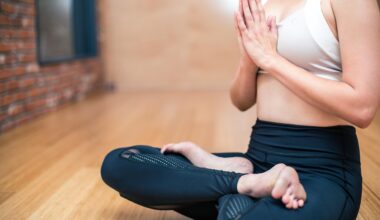
Two ancient practices, yoga and tai chi, are prominent in enhancing balance and coordination. Both disciplines focus on controlled movements, breathing, and mindfulness, contributing to greater body awareness. Yoga offers numerous poses that challenge balance, such as tree pose, warrior III, and half-moon pose. Practicing these poses regularly can strengthen lower body muscles while improving flexibility and stability. Tai chi, on the other hand, emphasizes slow, deliberate movements, focusing on shifting weight and refining coordination. The gentle nature of tai chi makes it accessible to a wide range of fitness levels, making it an ideal practice for older adults as well. Regular participation in these mindful practices fosters meditative states and enhances neuromuscular function, promoting overall balance and coordination. Combining both yoga and tai chi into your routine will create a well-rounded approach to improving core stability and mobility. Moreover, these activities serve as stress relievers, contributing positively to mental health. Set aside time each week for both practices to fully experience their benefits and observe gradual improvements in your physical skills over time.
Another effective method to improve balance is through strength-training exercises that target the legs and core. Exercises like squats, lunges, and step-ups strengthen important muscle groups responsible for maintaining stability. These exercises not only enhance muscle strength but also improve proprioception, which is the awareness of body position in space. To integrate strength training, individuals should aim to perform these movements two to three times weekly. Incorporating resistance bands or weights can add an extra challenge while ensuring that muscles are continuously tested and developed. When executing these movements, be mindful of posture and alignment to prevent injuries. Additionally, consider engaging in balance-enhancing gym machines if access to a gym is available, such as Bosu balls or balance boards. These tools can facilitate dynamic movement patterns requiring both strength and coordination. Beyond structured workouts, you can also include functional mobility exercises in daily life, such as climbing stairs or walking on uneven surfaces. By incorporating strength training into your balance regimen, individuals will link increased strength with enhanced coordination, resulting in holistic physical improvements.
The Importance of Consistency and Tracking Progress
Engaging with exercises aimed at improving balance and coordination requires consistency for effective results. It is critical to prioritize dedicated practice time to enhance your skills meaningfully. Setting realistic goals is important; for example, aim to practice balance exercises for at least 10 minutes daily. Tracking your progress, whether through journaling or using fitness apps, can help monitor improvements closely. Celebrate small victories such as increased time balancing on one leg or completing more repetitions of strength-training exercises. Acknowledging these milestones fosters motivation and encourages continued practice. Furthermore, consider adopting a balanced routine that includes various exercises; this diversity prevents monotony and keeps your mind engaged. Building a community or finding a workout partner can create accountability, making exercise more enjoyable, thereby increasing adherence. Another way to maintain motivation is to incorporate technology, such as virtual classes or guided videos, which offer new ideas and challenges. By focusing on consistency and tracking progress, individuals can measure their advancements over time, reinforcing the importance of perseverance and dedicated effort toward achieving improved balance and coordination skills.
Lastly, don’t forget the importance of proper nutrition and hydration in adopting a successful balance and coordination regimen. The role of adequate nutrition cannot be overstated; a well-rounded diet provides the energy and nutrients essential for optimal physical performance. Incorporate foods rich in calcium and vitamin D to support bone health, as well as lean proteins for muscle recovery and development. Hydration plays a crucial role as well because dehydration can impair muscle coordination and balance, so be sure to drink sufficient water throughout the day. Foods that are rich in antioxidants, such as fruits and vegetables, can also play a role in improving muscle function, thereby enhancing coordination capabilities. As you engage in balance and coordination exercises, remember to listen to your body’s signals. Rest is necessary to prevent injuries and ensure sustainable progress. By embracing a holistic approach that encompasses exercise, nutrition, and hydration, individuals can achieve superior outcomes in balance and coordination, creating a higher quality of life and reduced risks of future injuries. So, start your balancing act today, and enjoy the benefits of improved posture and movement.