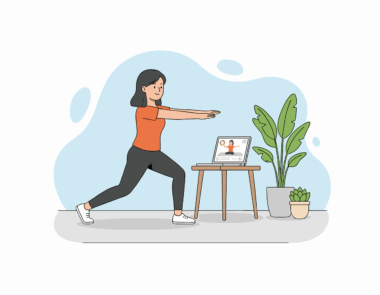

Progressive Overload Methods for Men Training at Home
For men training at home, understanding progressive overload is essential for muscle growth. This technique involves gradually increasing the weight, frequency, or repetitions of your exercises. When applying progressive overload methods, it’s vital to set specific and measurable goals. Start by determining your current lifting capacity, then choose an incremental increase for weights. For instance, you might add 2.5 to 5 pounds every week to your lifts. Another useful strategy is to increase the number of repetitions while maintaining the same weight. By pushing your limits, you force your muscles to adapt. You can also modify the intensity with resistance bands, bodyweight exercises, or various angles, which can stimulate different muscle fibers. Tracking your workouts is crucial to ensure you’re progressively overloading. Keep a journal or use an app to record the weights used, sets and reps completed, and your overall goals. Nutrition plays a critical role in this process as well; ensure you consume enough protein to support muscle recovery and growth. With consistency, you’ll notice gains in strength and physique, affirming the effectiveness of progressive overload in your home training routine.
One effective way to implement progressive overload at home involves changing the tempo of your lifts. Slowing down the eccentric phase, where you lower the weight, increases time under tension for your muscles. For example, perform a squat while taking four seconds to go down and then one second to rise. This method encourages greater muscle engagement, ultimately leading to a more effective workout. Additionally, incorporate drop sets, a technique where you perform an exercise until failure, then immediately reduce the weight and continue. This will challenge your muscles to adapt quickly to increasing demands. It can also be beneficial to integrate supersets into your routine, where you perform two exercises back-to-back with minimal rest. For instance, pair push-ups with tricep dips. Lastly, ensure you have enough recovery time between workouts as it allows your muscles to repair and grow. Consider alternating muscle groups each week or having a dedicated rest day. Consistency is key to seeing results; commit to your workout schedule and remain disciplined. The combination of different overload methods will elevate your fitness and strength levels during your home workouts.
Utilizing Bodyweight Exercises
Bodyweight exercises are an excellent way to apply progressive overload without weights. Variations increase resistance and challenge your muscles. Start with standard exercises like push-ups, squats, or lunges and progressively work to more advanced variations. For example, transitioning from regular push-ups to decline push-ups elevates your feet, making the exercise harder. You can also experiment with one-handed push-ups or explosive movements to enhance intensity. Another approach is to change the leverage in bodyweight exercises. For instance, if you can perform regular planks with ease, try adding variations such as side planks or dynamic movements. Progression can happen through adding pauses, elevating feet, or increasing sets and reps. It is crucial to maintain proper form to avoid injuries. Focus on engaging the right muscle groups and execute movements correctly. Another way to implement progressive overload is to extend time held in each position. For example, hold a squat or plank longer to improve endurance. Structure your workouts to include a combination of lower body, upper body, and core exercises. This variety keeps things fresh while continuously challenging your body to adapt and grow stronger.
Another vital element in progressive overload is the principle of rest-pause training, where short rest intervals are integrated into your workout sets. This strategy allows you to push beyond perceived limits, increasing time under tension. For example, if you’re doing a set of squats, you can take brief 10–20 second rests upon reaching muscular fatigue and then continue for additional reps. This method not only challenges the muscles but also develops mental toughness, crucial for long-term fitness success. Mixing cardio with strength workouts can also incorporate overload principles. You could alternate between high-intensity interval training (HIIT) and resistance exercises, ensuring that your heart rate is challenged consistently. This variation results in greater caloric expenditure and overall conditioning. Don’t forget the importance of listening to your body throughout your workouts. If you feel fatigued or notice signs of overtraining, it might be a sign to adjust your routine. Prioritizing recovery and nutrition cannot be overstated. Support your training with adequate hydration, fuel-rich meals, and rest. Nutrition helps in muscle repair, while sleep promotes overall recovery, which is essential in your progression.
The Role of Equipment
Even when training at home, utilizing equipment can enhance progressive overload results. Consider investing in adjustable dumbbells or kettlebells that allow for changing weights easily as you progress. Bands are an asset for building strength, as they provide variable resistance throughout movements and can be combined with bodyweight exercises. You can attach bands to a mid-low point, then add resistance as you pull or push. For added intensity, enhance exercises by adding circuits. For instance, perform a set of bicep curls using dumbbells, followed immediately by push-ups, then shoulder presses. Utilizing circuits will increase your heart rate, enhancing overall conditioning while still focusing on strength. As always, ensure proper form when using weights or bands. Focus on controlled movements to avoid strains or injuries. Each movement should be patient and deliberate, emphasizing the muscular effort. Lastly, consider incorporating mobility exercises and stretching within your program. Mobility work addresses tight areas and improves performance during strength training. Building strength isn’t just about heavier weight; it’s also about range of motion, active recovery, and sustainable practices.
A common mistake novices make in progressive overload is seeking immediate results. Understand that significant gains take time, and maintaining patience is critical. Celebrate the small victories; perhaps you completed an extra rep or improved your form. These moments will motivate you to stay dedicated to your goals. Stick to a consistent schedule, which forms the basis for sustainable growth. Monthly assessments can also keep your training on track; evaluate your weight, sets, reps, or number of exercise variations mastered to gauge progress. Another important factor is to maintain a positive mindset towards your training. While it can be challenging, emphasizing personal growth over comparison can lead to a more rewarding experience. Connect with fitness communities online or join a local group to encourage accountability and camaraderie. Sharing progress with others can provide much-needed motivation. Consistency over intensity will yield better results in the long run. Focus on the long-term benefits of training rather than quick fixes. Each session strengthens your foundation, allowing you to build further. Be proud of the commitment and hard work put into each workout, as it lays the groundwork for a healthier lifestyle.
Conclusion and Next Steps
As you embark on your progressive overload journey at home, remember it’s a gradual and evolutionary process. Education about your body and the importance of recovery is just as vital as the workouts themselves. Adapt your training program based on how your body responds. Provide yourself grace as you learn and grow through the process, gradually adapting to challenges. Additionally, set realistic milestones; aim for a balance between ambition and practicality, ensuring your goals are attainable yet sufficiently challenging. Incorporating variety in exercises and routines will also keep you engaged, preventing monotony in your workouts. Utilize available resources like online tutorials, fitness apps, or trainers who can guide and provide feedback. The home environment can be optimized for all fitness levels, fostering a community that encourages improvement and support. Embrace flexibility in your workout choice, as it will lead to better adherence to your training schedules. Ultimately, the journey of fitness is a deeply personal one. Commit yourself to the process, and as improvements manifest in strength and endurance, you’ll find satisfaction in your fitness journey.
Make sure to keep improving and assessing your process. The principles you’ve learned about progressive overload are tools for muscle growth, strength building, and overall fitness improvements that will transform your home workouts. Act on the knowledge gained by regularly evaluating your routines and making adjustments based on your experiences. As you implement varied exercises and methods into your plans, you will enhance your understanding of your progress and how to overcome each hurdle. Remain open to change; fitness is a constantly shifting landscape, and being adaptable will keep you ahead. Most importantly, enjoy the journey, as fitness is meant to be a rewarding experience. Embrace each challenge you encounter, using it as a stepping stone to greater heights in your fitness regimen. Create a supportive environment, whether at home or within your circle, to thrive together. Continue sharing achievements, challenges, and transformations, as fitness bonds communities. Finally, keep informed by reading articles, joining forums, and following trusted fitness experts who inspire and educate others along their paths. With dedication and enthusiasm, you can maximize every workout effort, paving the way for incredible results.