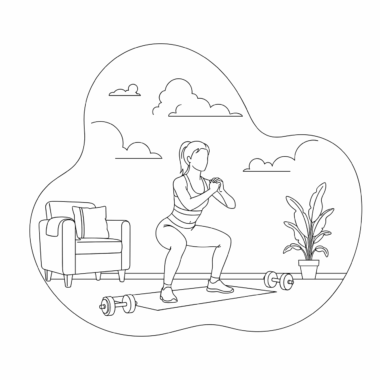

Bodyweight Mobility Drills for Better Squat Mechanics
Improving your squat mechanics is essential for athletic performance and daily activities. Bodyweight mobility drills can enhance flexibility, strength, and overall movement quality. By focusing on specific areas of the body, you can correct imbalances and prevent injuries. Engaging in a consistent routine of mobility exercises will help you achieve deeper and more effective squats. Mobility drills target joint range of motion, allowing for safer and smoother movements under load. Many athletes neglect mobility work, which can lead to poor squat mechanics. Incorporating drills should be a priority. Bodyweight exercises are advantageous because they can be performed anywhere and require no equipment. This allows for easy integration of mobility drills into your training regimen, providing immense benefits. Begin with light warm-ups, followed by targeted mobility work for the hips, ankles, and thoracic spine. These areas often require attention to facilitate proper squat form. Improving your squat mechanics is not just beneficial for lifting but essential for enhancing functional movements in daily life. This commitment to mobility translates into better overall performance in various physical activities and helps maintain muscle health over time.
Essential Mobility Drills for Squat Depth
One effective mobility drill for improving squat depth is the “Couch Stretch.” This exercise opens the hips and stretches the quadriceps, facilitating a deeper squat position. To perform it, kneel with one knee on the ground, placing the other foot on the couch or wall in front of you. Push your hips forward gently while keeping your chest upright. Hold each position for at least 30 seconds, alternating sides. Another vital drill is the “Hip Flexor Stretch.” Step forward with one leg into a lunge position, keeping the back knee on the ground. Lean lightly into the front knee while lifting the arm on the same side as the back leg, creating a stretch along the hip flexors. Hold it for 30 seconds before switching sides. The “Ankle Mobility Drill” is crucial as well. Stand facing a wall with one foot a couple of inches away from it. Bend your front knee toward the wall without lifting your heel off the ground. This drill enhances ankle dorsiflexion, which is critical for achieving proper squat depth.
The “Leg Swings” drill is another beneficial exercise for squat mechanics. Stand next to a wall or a sturdy object for balance. Swing one leg forward and backward while keeping the upper body stable. Perform 10 to 15 swings on each leg to loosen up the hip joint dynamically. This movement activates the hip flexors and hamstrings while promoting blood flow. Additionally, the “Deep Squat Hold” is a fundamental bodyweight exercise that can help improve squat mechanics. Set your feet shoulder-width apart and lower into a squat position, keeping your chest upright and your weight in the heels. Use your elbows to push against your knees, helping to open the hips. Hold this position for 30 to 60 seconds, breathing deeply. The more frequently you practice this exercise, the easier it becomes to maintain proper squat form. Consider incorporating these drills into your warm-up routine before strength training. It’s an excellent way to prepare your body and mind for a productive workout session. Prioritize mobility and stretching to enhance not only squatting mechanics but overall functional movement capabilities.
Strengthening with Bodyweight Movements
In addition to mobility drills, bodyweight strength movements support better squat mechanics. Exercises like the “Bodyweight Squat” are fundamental for building strength and stability. Focus on perfect form while squatting down, ensuring your knees track over your toes. Perform sets of 10 to 15 repetitions, concentrating on smooth and controlled movements. Another excellent bodyweight movement is the “Single-Leg Deadlift,” which enhances balance and strengthens the posterior chain. Stand on one leg, hinge at the hips, and lower your torso while extending the opposite leg back. This movement improves hip stability, critical for a successful squat. Incorporating “Lunges” into your routine helps develop leg strength. Forward or reverse lunges activate major muscle groups involved in squatting. Perform three sets of 10 lunges per leg while ensuring the knee stays aligned over the ankle throughout the motion. Lastly, consider the “Plank” as it builds core strength, essential for maintaining proper alignment during squats. Include variations such as side planks to engage different stabilizing muscles. By focusing on these strength movements alongside mobility drills, you will achieve well-rounded improvements to your squat mechanics.
Indeed, proper breathing technique is just as critical as mobility and strength in executing squats. Learning diaphragmatic breathing can increase intra-abdominal pressure and enhance core stability during the squat. Practice inhaling deeply through the nose, allowing the abdomen to expand, and then exhaling through the mouth as you descend into the squat. This technique will help maintain a stable core and prevent unwanted movement patterns that lead to injury. Additionally, reinforcing squat mechanics through conscious body awareness will improve your lifts over time. Regular feedback, whether from a training partner or through video analysis, will aid in correcting form and technique. By reviewing your performance, you can identify tendencies such as excessive forward lean or inadequate depth. Complement your mobility and strength work with feedback sessions to monitor progress effectively. Create a consistent schedule that includes both mobility drills and strength exercises. Over time, you will notice significant improvements in your squatting technique. The combination of these methods will not only make you a better squatter but also reduce the risk of injury associated with poor mechanics. Commit to your mobility journey, and watch how it enhances your squat performance!
Conclusion: Make Mobility Drills a Habit
In conclusion, bodyweight mobility drills and strength exercises are essential for developing better squat mechanics. By integrating these drills into your routine, you’ll experience improved flexibility, stability, and strength in your lower body. Remember that consistency is key; prioritize these movements to achieve long-lasting benefits. Mobilizing the hips, ankles, and thoracic spine will prepare you for strenuous squatting sessions, reducing the likelihood of injuries. Your commitment to mobility will lead to not only better squat performance but also improved overall athletic ability. In the pursuit of physical fitness, take some time to assess your squat form regularly. Track your progress and be patient as you develop new habits. Establish a realistic plan that incorporates all necessary components—mobility, strength, stability, and feedback. Make adjustments in your exercises as needed, focusing on correct techniques to maximize benefits. Share this information with fellow athletes and fitness enthusiasts; they too can benefit from enhanced squat mechanics through mindful practice. Dive into these bodyweight mobility drills, benefiting both your squatting capabilities and overall movement patterns. Let mobility be the foundation for your journey in fitness.
Some sample content with exactly 190 words. Lorem ipsum dolor sit amet, consectetur adipiscing elit. Integer nec odio. Praesent libero. Sed cursus ante dapibus diam. Sed nisi. Nulla quis sem at nibh elementum imperdiet. Duis sagittis ipsum. Praesent mauris. Fusce nec tellus sed augue semper porta. Mauris massa. Vestibulum lacinia arcu eget nulla. Class aptent taciti sociosqu ad litora torquent per conubia nostra, per inceptos himenaeos. Curabitur sodales ligula in libero. Sed dignissim lacinia nunc. Curabitur tortor. Pellentesque nibh. Aenean quam. In scelerisque sem at dolor. Maecenas mattis. Sed convallis tristique sem. Proin ut ligula vel nunc egestas porttitor. Morbi lectus risus, iaculis vel, suscipit quis, luctus non, massa. Fusce ac turpis quis ligula lacinia aliquet. Fusce nec tellus sed augue semper porta. Mauris massa. Vestibulum lacinia arcu eget nulla. Class aptent taciti sociosqu ad litora torquent per conubia nostra, per inceptos himenaeos. Curabitur sodales ligula in libero. Sed dignissim lacinia nunc. Curabitur tortor. Pellentesque nibh. Aenean quam.
Effective Techniques for Bodyweight Movements
A complete workout program should not only include resistance training but also bodyweight movements. These sessions can be performed anywhere and are incredibly effective for strengthening various muscle groups. Key exercises include push-ups, planks, and lunges, which engage multiple areas of the body. Further, aim to perform these exercises with correct form to maximize their effectiveness. For beginners, start with basic variations before advancing to more challenging ones. Consider seeking guidance from a fitness trainer to ensure proper technique. Developing a regimen that incorporates bodyweight exercises improves stability, balance, and strength while fostering muscle coordination. Consistency is essential in these routines, as it leads to noticeable improvements in performance and endurance. Tailor your workouts to include a combination of bodyweight exercises and mobility drills to cover all aspects of fitness. This synergy helps improve your overall physical fitness level while allowing your body to recover adequately from intense workouts. Make it a habit to include bodyweight movements in your training and observe how your body adapts over time. As you become proficient, you’ll notice an increase in your capability and performance in advanced exercises.