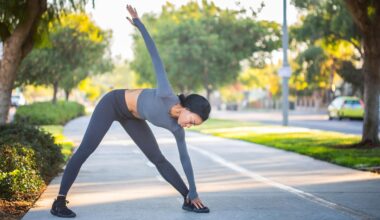

How to Prepare Your Body for Power Yoga Sessions
Preparing your body for Power Yoga involves various steps that embody physical and mental readiness. First, it’s crucial to engage in a proper warm-up routine. This can include gentle stretches, dynamic movements, or even some light cardio. A good warm-up will increase blood flow and prepare your muscles. Additionally, proper hydration plays a vital role. Drinking sufficient water before your session can help enhance performance and prevent fatigue. You may want to hydrate throughout the day as well. Consuming nutritious foods that provide energy is also essential. Foods rich in carbohydrates and proteins will help fuel your body during practice. Consider having a light snack, such as a banana or a handful of nuts, about an hour before your class. Lastly, focus on your breathing technique. Deep breathing exercises will calm your mind and prepare it for the upcoming session. Incorporate practices like diaphragmatic breathing to enhance lung capacity. Each element contributes significantly to getting your body ready for Power Yoga, ensuring a fruitful practice that promotes strength and flexibility. Be patient with yourself, and gradually increase your efforts as you become more accustomed to the discipline.
Another important aspect of preparing your body for Power Yoga is posture awareness. It’s crucial to understand the basic stances and movements before diving into more advanced positions. Take the time to familiarize yourself with poses like Downward Dog, Warrior, and Tree pose. Knowing how to align your body properly can prevent injuries and ensure you receive the full benefits from each posture. Take note of where you hold tension during these poses and work on releasing it. Additionally, incorporating strength training could be beneficial. Strengthening exercises like planks and push-ups will improve your overall core strength, enhancing your ability to hold difficult poses in Power Yoga. Moreover, flexibility training outside of yoga practice can complement your sessions significantly. Stretching regularly assists in achieving long-term flexibility, making transitions in Power Yoga smoother. It is essential to listen to your body and modify poses when necessary. If you experience discomfort or pain, consider adjusting your alignment or taking a step back to a simpler variation. Modifications in Power Yoga can be just as valuable and essential for accessibility, ensuring a sustainable practice that caters to your unique bodily needs.
Developing a Mindful Approach
Developing a mindful approach towards your practice is also fundamental in preparing for Power Yoga. Before starting, take a few moments to engage in mindfulness exercises. These can include meditation or visualization techniques focusing your intentions for the session. Reflect on your physical limits and realistically assess them before you begin. Setting clear, achievable goals helps you maintain an attitude of mindfulness throughout your practice. During Power Yoga sessions, concentrate on the rhythm of your movements and your breath. Letting thoughts drift will naturally occur, but returning your focus to the present moment is vital in achieving an effective practice. You can maintain mindfulness by silently naming the poses and their benefits as you flow through them. This doesn’t just enhance your concentration but also reinforces the purpose of each posture. Practicing mindfulness contributes to emotional awareness, allowing you to feel more connected to your body. Emotional connection is often overlooked, yet it plays a supportive role in body acceptance and progression in Power Yoga. Integrating mindfulness techniques fosters a holistic approach towards your yoga journey, promoting both physical and mental well-being in a balanced manner.
Moreover, establishing a consistent routine can greatly enhance your preparation for Power Yoga. A regular schedule builds habits that can lead to improved performance and mental readiness. Try to select specific days and times that work best for you, and commit to those sessions each week. This consistency will make your body predictable to its practice dynamics. Additionally, consider creating a personal space for your sessions, whether at home or another setting, that inspires calm and focus. Use props like mats, blocks, and straps to aid your practice comfortably. Understanding when to use these props and ensuring they’re available will help you fully immerse into each pose. Furthermore, staying connected with a community or finding a Power Yoga class can provide motivation. Interacting with fellow practitioners can enhance your experience and offer support. Learning from others also presents an opportunity for growth and refinement of techniques. Community engagement fosters a sense of belonging, which is beneficial for sustaining your practice. In conclusion, consistency and community combined serve as excellent preparations for getting the most beneficial experience from your Power Yoga sessions.
Nutrition and Recovery
Nutrition plays a vital role in preparing your body for Power Yoga sessions. Eating a balanced diet rich in vitamins and minerals will enhance your energy levels. Incorporate whole grains, fruits, and vegetables into your daily meals. Foods like oats, quinoa, spinach, and berries provide essential nutrients necessary for maintaining stamina and focus during your practice. Additionally, paying attention to protein intake is crucial. Sources such as legumes, chickpeas, and lean meats can help in muscle recovery post-session. Consider timing your meals wisely; avoid heavy meals right before practice. Instead, consume light snacks an hour prior to provide energy without causing discomfort. Post-practice nutrition is just as important. Replenishing your body with proteins and carbs soon after your session aids in recovery. Smoothies containing fruits and protein powder can be a quick, efficient option. Furthermore, prioritizing rest is essential for recovery. Ensure you get adequate sleep, aiding in muscle repair and overall well-being. A well-rested body is more likely to respond positively during Power Yoga, facilitating improved flexibility and stamina. Balancing nutrition with recovery will create a stronger foundation for your Power Yoga endeavors.
Lastly, integrating a cool-down routine at the end of your Power Yoga sessions is beneficial. Cool-down practices help bring your heart rate back to normal and aid in muscle recovery. Simple stretching routines and relaxation techniques can enhance your overall practice experience. Poses like Child’s Pose and Supine Twist can be effective in aiding relaxation after an intense session. Moreover, investing time in restorative yoga can complement your Power Yoga sessions effectively. These practices help in increasing flexibility and serving as a gentle counter to the intensity of Power Yoga. It’s essential to listen to your body during the cool-down; if certain muscles feel tight or fatigued, dedicate more time to those areas. Incorporating self-care techniques, like using foam rollers or massage balls, can also be beneficial. These techniques can help relieve tension and promote recovery. Additionally, adopting an attitude of gratitude and reflection at the end of each session can enhance your mental aspect of yoga. Recording your progress in a journal can provide insights into your journey and enhance commitment. Overall, a cool-down and recovery routine is vital to maintaining a sustainable and enjoyable Power Yoga practice.
In conclusion, effectively preparing your body for Power Yoga sessions involves different strategies that maximize both physical and mental readiness. By incorporating warm-ups, proper hydration, nutrition, and mindfulness, your practice can significantly improve. Posture awareness, community engagement, and a consistent routine are critical in making progress toward your yoga goals. Remember that nutrition and recovery are also key components that cannot be overlooked. Staying mindful during practice and establishing a cool-down routine leads to improved flexibility and performance, ensuring you receive optimum benefits from Power Yoga training. Each of these elements supports a holistic approach to achieving stronger mind-body connections. As you engage in Power Yoga, allow yourself to grow and evolve. Additionally, being patient with your journey will encourage a sustainable practice that keeps you motivated. Remember that progress is often gradual, and celebrating small achievements can boost your confidence. Connecting with your breath, body, and community promotes a fulfilling approach to your Power Yoga journey. Gradually integrate these practices into your routine, and you will witness a remarkable transformation over time. Embrace the journey, enjoy the process, and relish the empowerment of practicing Power Yoga.
Take your time in navigating the challenges posed by Power Yoga. Strengthening your mental resolve alongside your physical prowess will lead to long-term improvement. Engage actively with the community and learn from seasoned practitioners. Challenge your limits while ensuring you listen to your body’s feedback. This practice requires both determination and compassion for oneself. Remember that each yoga session is an opportunity to learn about yourself. Be mindful of your goals and adjust them as necessary. You may face ups and downs along the way, but perseverance can be your ally. Gradually introduce new techniques and encourage yourself to tackle more complex poses only after mastering foundational ones. Establish a consistent practice schedule that fits your lifestyle but allows for adequate recovery time. Remain committed, and don’t hesitate to seek guidance from instructors; their expertise can guide your journey. In time, you’ll discover the benefits extend far beyond your physical practice, influencing your daily life positively. Finally, embrace a spirit of inquiry; discover what Power Yoga means for you personally. By doing so, you’ll develop a powerful connection to your practice, enhancing the overall experience.