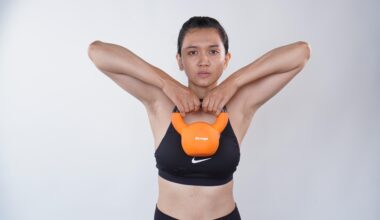

How Plyometrics Improve Agility and Speed in HIIT Workouts
Plyometrics, a crucial component of athletic training, focuses on explosive movements that increase agility and speed. When incorporated into HIIT, or High-Intensity Interval Training, plyometric exercises can significantly enhance one’s overall athletic performance. The integration of these dynamic movements, such as jump squats and burpees, adds an element of intensity that pushes the cardiovascular system and builds muscular power. This is particularly beneficial for athletes or fitness enthusiasts looking to improve their competitive edge. Incorporating plyometrics requires proper form and technique to reduce the risk of injury while maximizing the benefits. By focusing on maximizing force production in short bursts, athletes experience improved stability and body control, essential for agility training. HIIT, in its essence, combines short, intense bouts of exercise with rest or low-intensity recovery periods, and incorporating plyometrics aligns perfectly with this structure. The explosive nature of the movements stimulates muscle fibers and promotes neural adaptations, leading to better speed and coordination. Thus, adding plyometrics to HIIT regimens is a powerful way to enhance fitness levels.
The efficacy of plyometric exercises in enhancing speed is well-documented. Plyometrics improves muscle responsiveness and explosiveness during training. By developing fast-twitch muscle fibers, athletes can sprint faster, bounce higher, and react more swiftly during competitions. Specifically, movements like box jumps and lateral hops engage various muscle groups and elevate heart rates. This combination not only boosts strength but also engages cardiovascular health, essential for sports that require quick bursts of energy. Including these exercises in a HIIT format optimizes the training’s overall impact, eliciting strength gains while burning calories efficiently. The high-intensity aspect of HIIT complements the explosive nature of plyometric movements, resulting in an effective workout regimen. One of the significant benefits includes improved coordination; as plyometric exercises require precise timing and execution, they help athletes perform better in their respective sports. The integration of plyometrics into HIIT also allows for versatile training sessions adaptable to varying skill levels. From beginners to seasoned athletes, these exercises can be scaled to fit different branches of fitness levels, promoting inclusivity in training.
Benefits of Plyometrics in HIIT
Incorporating plyometrics in HIIT workouts provides numerous benefits, primarily through enhancing stamina and agility. Stamina increase comes from the continuous explosive movements that require substantial oxygen consumption, leading to improved cardiovascular endurance. Moreover, a regular plyometric routine can help develop muscle tone and increase overall strength. This leads to better body composition, which is vital for fitness enthusiasts aiming for fat loss. Plyometric training also sharpens the central nervous system’s response times, providing quicker reflexes beneficial in sports context. Athletes witness improvements in their ability to change direction rapidly, vital for sports like basketball and soccer. Additionally, these exercises can enhance proprioception, which is the body’s ability to perceive its position and motion. Better proprioception results in fewer injuries and improved sport-specific skills. Furthermore, incorporating these explosive movements aids in muscle recovery by promoting blood circulation. Continuous movement in a plyometric HIIT session can facilitate quicker recovery post-exercise. Essential for athletes, this reduced recovery time translates into more effective training cycles, leading to enhanced performance.
Plyometrics not only contribute to physical improvements but can also foster significant mental resilience. The focus required during plyometric drills enhances concentration and mental acuity. Utilizing high-intensity intervals forces individuals to push their limits, cultivating a mindset of perseverance. For many, the mental aspect of training can sometimes be more challenging than the physical demands. Engaging with the varying intensity levels of HIIT that incorporate plyometrics cultivates a sense of achievement as one progresses. The nature of these exercises encourages participants to envision their goals, reinforcing their motivation for improvement. Understanding the physiological benefits alongside these mental facets keeps individuals dedicated to their routines. Additionally, the varied nature of plyometric exercises reduces monotony in training programs. A diverse workout keeps participants engaged, avoiding the pitfalls of boredom that can lead to dropout. The excitement of performing new exercises consistently fuels motivation. Having fun while training is crucial, as positive experiences can lead to sustained commitment. By combining enjoyment with effective workouts in HIIT, plyometric exercises help maintain long-term interest in fitness.
Practical Applications of Plyometrics in HIIT
To practically incorporate plyometrics into HIIT, consider structuring intervals that alternate between aerobic exercises and explosive movements. For example, after a minute of intense sprinting, a participant could perform jump squats for twenty seconds. This technique stimulates both aerobic endurance and anaerobic power. It’s also essential to prioritize a proper warm-up with dynamic stretches to prepare muscles for intense movement. Plyometric drills should be performed with correct form to minimize injury risks and maximize effectiveness. Aiming for three to four irregularly timed circuits of plyometric activities can significantly enhance performance while keeping workouts challenging. Adjusting rest times between intervals can tailor workouts to individual fitness levels, ensuring inclusivity. It’s also beneficial to track progress, not just through performance metrics but mentally, recognizing changes in workout enjoyment and stamina. HIIT sessions can utilize a variety of plyometric movements targeting different muscle groups, providing comprehensive development. For example, integrating lateral bounds can engage different leg muscles offering a full-body workout. Regular cycles of different plyometric exercises within HIIT routines offer freshness, keeping participants engaged over long periods.
Another effective method of incorporating plyometrics in HIIT workouts is by utilizing core conditioning. The core engages during plyometric exercises, promoting core strength and stability as part of the overall fitness routine. Movements like clapping push-ups or medicine ball slams not only build upper and lower body strength but also focus on core engagement. Enhancing core strength translates to improved athletic performance in virtually any sport. Proper core engagement ensures full-body stability and control during intense activities. Moreover, performing plyometric exercises fosters an enhanced mind-body connection, helping improve coordination during regular physical activity. The coordination achieved through these movements translates directly into improved sports performance, where precision and reaction times matter most. In HIIT, the varied tempo promotes muscle fiber activation, which can lead to improved speed and agility. A well-rounded approach to plyometrics in HIIT fosters both anaerobic conditioning and aerobic capacity development. This dual-focus facilitates balanced calorie-burning and builds muscle endurance. As a result, participants finish workouts feeling accomplished and empowered to tackle subsequent sessions.
Summary
In conclusion, incorporating plyometrics into HIIT workouts not only facilitates enhanced speed and agility but promotes overall fitness and resilience. Athletes and fitness enthusiasts alike gain from the increased strength, coordination, and mental focus stemming from these exercises. Regular integration of plyometric training catalyzes incredible performance improvements while keeping participants engaged. Utilizing various plyometric techniques within HIIT structure, including explosive movements, leads to an effective and beneficial conditioning experience. The potential to enhance body composition along with cardiovascular endurance ultimately leads to remarkable fitness outcomes. It’s essential to keep track of personal progress and adapt training routines to maintain interest and reach goals. Focusing on executing plyometric drills with proper form is critical to prevent injuries and ensure the effectiveness of workouts. As athletes continue to push their limits through engaging HIIT sessions, the benefits of incorporating plyometrics become undeniably evident. Ultimately, the fusion of plyometrics in HIIT results in a more holistic fitness approach that fosters achievement. Through commitment and innovative training techniques, individuals not only transform their physical capabilities but also their mindsets, enjoying the journey of fitness.