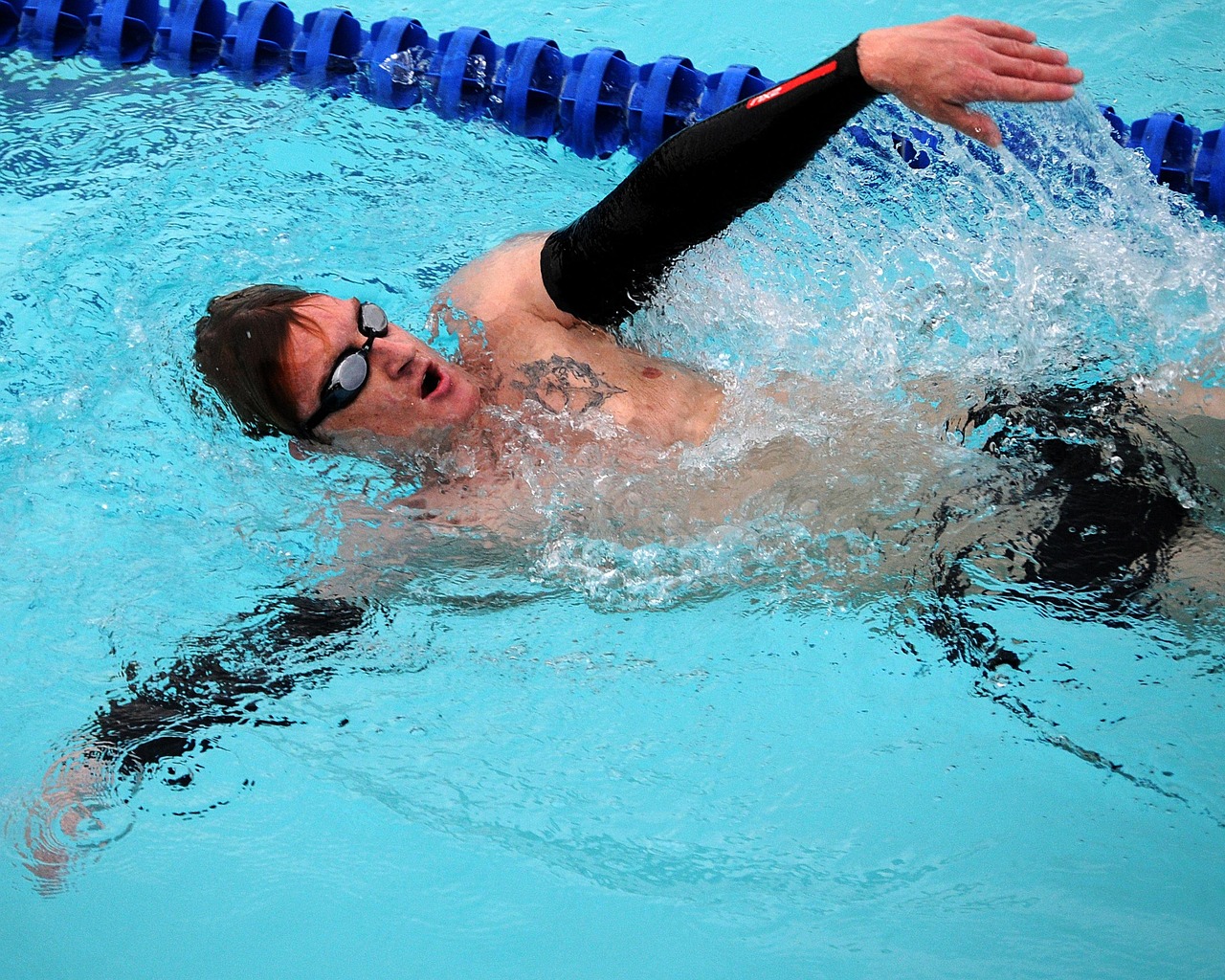

Mastering the Basics of Backstroke Swimming for Beginners
Backstroke swimming is an essential skill every swimmer should master. It’s not merely about floating on your back; the technique involved is crucial. Proper backstroke form begins with the head position. Keep it aligned with your spine, looking directly up at the ceiling. Your hips should remain high in the water, reducing drag. A common mistake is letting one’s head drop, which can lead to a sagging body position. Make sure you’re aware of the sensation of water against your body. Your arms should alternate in a windmill motion, entering the water near your head. Ensure your fingers enter with the correct angle to minimize resistance. Kicking plays a vital role; however, backstroke requires a unique flutter kick. Rather than kicking vigorously, focus on a steady, rhythmic motion for propulsion. Additionally, maintaining a consistent breathing pattern is important to increase efficiency. Control your breaths, keeping your face above the water, yet relaxed. Regular practice will significantly enhance your overall performance in backstroke swimming. This swim stroke can be a fun and engaging activity for swimmers of all abilities.
Understanding the importance of the backstroke is crucial for all swimmers. It aids in developing overall swimming skills and builds confidence in the water. One effective way to enhance your backstroke is through drills. Specifically designed drills focus on different components such as arm movement, body rotation, and kick strength. One simple drill is the “Single Arm Backstroke”; this isolates one arm to help you focus on your stroke mechanics. Perform this drill on both sides to maintain a balanced stroke. Moreover, the “Kickboard Drill” enhances your kicking technique while supporting your body. Use a kickboard for stability; this allows you to concentrate solely on your flutter kick. It’s beneficial to practice timing your arm movements with your breathing patterns. Coordination is vital in swimming, particularly in backstroke. Always maintain a rhythm that works for you; finding your tempo helps significantly. Additionally, consider incorporating backstroke training in your routine. Alternating between different strokes promotes balanced muscle development. As your confidence grows, experiment with speed and technique variations. Remember, the goal is to improve while enjoying the process. Every moment spent practicing brings you closer to mastery.
Effective Techniques for Improving Backstroke
Technique plays a significant role in backstroke swimming’s effectiveness. One of the most vital aspects of your backstroke is maintaining an optimal body position. Your torso should be slightly arched in an “S” shape. This creates a streamlined profile, allowing for reduced drag. Ensure to keep your hips close to the water’s surface. As your hands enter the water, maintain a soft elbow for an effective catch. The “High-Elbow” technique is commonly recommended to maximize your pull. It allows for better water engagement and propulsion. Another critical element is the flutter kick; it should originate from your hips rather than your knees, which is often mistaken. Keep your legs relaxed; they only need to be a few inches below the surface. Timing your kicks with your arm strokes can yield better speed. It helps to visualize a fluid motion; push the water back with your hands, while your legs provide propulsion. Furthermore, practice drills focusing on one component at a time for effective learning. Self-awareness and regular feedback, whether from yourself or a coach, can bring noticeable improvements. Dedicate time to refining these techniques; it’s key to progression.
Monitoring your progress in backstroke swimming is fundamental for improvement. Regularly assess your skills and techniques to identify areas for enhancement. Consider filming your strokes; visual feedback can be incredibly enlightening. Watching yourself swim helps notice incorrect form and offers valuable learning points. Set specific goals, such as improving your speed or stroke efficiency. Use a stopwatch to record times over set distances, such as 25 or 50 meters. This consistent tracking allows you to see trends that emerge in your performance. Another resource is utilizing smart swim watches or tracking apps specifically designed for swimmers; these gadgets often provide advanced metrics to improve your practice. Participate in friendly competitions or join a local swimming club; this offers motivational opportunities. Additionally, collaborating with more experienced swimmers or coaches can yield productive conversations about techniques. They might share tips you haven’t considered yet. Regular practice combined with peer support can dramatically elevate your skills. Lastly, always stay positive and patient. Skill development takes time and effort, so never lose sight of the enjoyment aspect of swimming. Celebrate small victories along the way. They contribute to your overall improvement.
Common Mistakes to Avoid in Backstroke
Identifying common mistakes in backstroke swimming can fast-track your learning curve. One prevalent error is incorrect head positioning; it’s crucial to keep your head in a neutral position. Many beginners often accidentally lift their heads too high, which leads to improper back alignment. This misalignment can cause excessive drag and fatigue over time. Another mistake is arm entry; hands should enter the water, fingers first, in a streamlined position. Entering too wide will disrupt your stroke rhythm. Using a splashy kick is also counterproductive; maintain a steady, less forceful flutter. Be cautious to not overexert your legs; excessive kick force can tire you prematurely. Furthermore, neglecting the rhythm between arm strokes can lead to an inefficient swimming pattern. Ensure your kicking matches your arm movements to maintain a cycle of smooth propulsion. Finally, not engaging your core is detrimental; a strong core provides stability and helps maintain a straight line through the water. Keep your entire body engaged while swimming; it promotes better overall technique. Awareness of these mistakes assists swimmers in making necessary adjustments to improve their form and effectiveness in backstroke.
Building endurance in backstroke swimming can present challenges, but with persistence, it can lead to significant improvements. To strengthen your endurance, gradually increase the length of your workouts. Start with manageable distances, and incrementally push yourself further. This technique helps your body adapt and increases cardiovascular capacity over time. Focus also on interval training; incorporate short bursts of high-intensity efforts followed by resting periods. This pattern mimics swimming competitions, enhancing both speed and stamina. Using tools like paddles or fins during practice can aid muscle conditioning but should not be overused. It’s important to alternate between equipment utilized and swimming without, to develop natural strength. Incorporating cross-training, such as running or cycling, complements swimming workouts. These activities build general fitness and can enhance your physical capabilities in the water. Hydration and nutrition also play a crucial role; ensuring proper fuel will improve your performance. Maintain a balanced diet rich in complex carbohydrates, proteins, and healthy fats. Also, allow yourself adequate recovery time after intense sessions. Listening to your body is vital. Incorporate rest days as needed to prevent burnout and injuries during your swimming journey.
Final Tips for Backstroke Success
To wrap up your backstroke training, remember that consistency is key. Establish a regular swimming schedule, whether it’s daily or several times a week. Ensure each session focuses on honing your backstroke technique and endurance. Additionally, setting both short-term and long-term goals provides direction for your training. Short-term goals may consist of mastering specific drills or improving technique, while long-term goals could include entering competitions or achieving a personal best. Regular feedback from coaches or peers can offer fresh perspectives and insights into your swimming technique and efficiency. Consider joining group practices as they provide community support and encouragement; teamwork often enhances motivation. Utilizing visualization techniques can also enhance performance; imagine your movements before executing them in the water to create a mental roadmap. Finally, always embrace a positive attitude towards challenges; overcoming obstacles will help cultivate resilience and strength as a swimmer. Cherish the learning process, and focus on progress rather than perfection. Each swim brings a new opportunity for growth. Incorporate all these elements into your routine for continued success in mastering backstroke swimming.