
Enhance Your Agility: Effective Coordination Exercises for Beginners
Agility and coordination are fundamental skills essential for all physical activities. They play a crucial role in sports, fitness, and even daily routines. Engaging in agility drills can significantly improve your motor skills. These skills can enhance your athletic performance and increase overall body awareness. In this article, we will explore various effective coordination exercises for beginners. Getting started with a systematic approach can make a huge difference in maintaining your balance and coordination. Before diving into the drills, it is vital to warm up adequately to avoid injuries. Simple warm-up routines such as leg swings and arm circles can be helpful. Remember, the goal is to improve your quickness and ability to change direction. The development of agility can benefit everyone. Beginners can start with core exercises, gradually progressing to more complex drills as they build confidence and coordination. Consistency in practice is key to mastering agility skills. Besides improving physical performance, these exercises can also contribute to providing mental clarity. So, let’s get started on this journey towards enhanced agility and coordination. Together, we can discover the various drills tailored for those just beginning their journey.
Understanding Coordination Drills
Coordination drills are specifically designed to enhance your body’s ability to move in a controlled and efficient manner. These drills usually require focused movements that develop the connection between the brain and muscles. A few primary types of coordination drills include balance exercises, reaction drills, and footwork patterns. Each category addresses a unique aspect of agility and coordination. For instance, balance exercises help establish stability. Reaction drills promote quick responses to external stimuli, while footwork patterns aid in developing precise movement skills. Beginners should prioritize balancing drills, as they form the foundation for more advanced movements. Practicing simple tasks such as standing on one leg while maintaining focus can be a good starting point. As one progresses, they can incorporate tools like jump ropes and agility ladders. These tools can challenge beginners further while keeping the exercises engaging. Consistent practice allows individuals to gauge their improvement over time. Setting clear personal goals and record progress can motivate any aspiring athlete. It is essential to recognize that everyone’s journey is unique. Therefore, tailoring your regimen to match personal preferences will help enhance enjoyment and commitment.
The first coordination drill to try is the classic cone drill. This drill helps hone your agility as you maneuver around different points. Place three to five cones in a straight line, spaced approximately four feet apart. Begin at one end and sprint towards the first cone, touch it, then return to the starting point. Repeat this process with each cone, focusing on swift, deliberate movements. To increase the intensity, add backward movement after touching each cone. This drill not only improves your agility but also enhances your directional change abilities, crucial for various sports. Moreover, practicing this drill helps develop your cardiovascular endurance. You can perform this exercise with a partner or family member to turn it into a friendly competition. Tracking the time it takes to complete the circuit can also motivate progress. Always remember to maintain proper form, as it is vital for maximizing benefits. Taking short breaks between sets for recovery will ensure that you can maintain optimum performance. The cone drill is versatile and can be modified based on skill level. Recommended for beginners, it lays a solid foundation for future training.
Implementing Ladder Drills
Ladder drills are an excellent way to develop foot speed and intricate coordination. These drills utilize an agility ladder, a straightforward piece of equipment that can fit into any workout routine. Start by laying the ladder flat on the ground, ensuring it is straight and stable. As a beginner, familiarize yourself with basic sequences like the one-foot-in and two-feet-in patterns. Execute these sequences by stepping in and out of each square while maintaining a rhythmic tempo. Doing so helps build muscle memory crucial for improved coordination over time. To progress, incorporate variations like lateral movements or cross-overs. Gradually increase the speed of your movements to add intensity to each session. As with other drills, proper warm-up and cooling down are crucial. Consistency in practicing ladder drills will yield significant improvements in your agility and coordination capabilities. Integrating these drills into your workout routine can enhance your athletic performance and help in various sports disciplines. Most importantly, make these exercises fun! Involve your friends or family. This way, everyone can enjoy the benefits while fostering a supportive environment.
Jump drills are another effective method to boost your overall coordination and agility. These drills can be performed almost anywhere and require minimal equipment, which makes them perfect for beginners. Start with basic vertical jumps, focusing on landing safely to minimize stress on your joints. As you progress, incorporate lateral jumps. Experimenting with height also increases the challenge and improves explosiveness. A plyometric box or a sturdy platform can be utilized for box jumps, significantly enhancing leg strength. Always maintain focus and control during take-off and landing, ensuring you absorb impact properly. These jump drills will not only enhance coordination but also build explosive power, which is beneficial in sports. Moreover, regular practice will lead to significant improvements in cardiovascular fitness. You can set time intervals or repetitions to add structure to your workout. Once comfortable with basic jumps, you can explore additional jump variations, like tuck jumps and broad jumps. Ultimately, the aim is to keep the body engaged and active while striving for fluid movements. Thus, it’s essential to stay motivated while experiencing measurable gains over time through continuous practice.
Practicing Balance Exercises
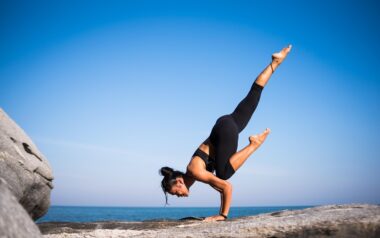
Balance exercises are an essential component of agility and coordination training. These exercises help develop your stability and proprioception—the ability to perceive your body position in space. Beginners can start with simple activities like balancing on one leg for extended periods. Try holding this position for 30 seconds or more, aiming to engage your core for added stability. Another effective balance exercise is the single-leg deadlift. It requires shifting your weight onto one leg while allowing the other leg to extend behind you. Ensuring proper form enhances effectiveness while preventing injuries. Additionally, using a stability ball or balance board can elevate the challenge. These tools help incorporate various muscle groups into balance exercises. As you increase your strength and coordination, you can add dynamic movements while balancing. Incorporating motions such as arm reaches or light weights will further activate the core and promote overall coordination. Building balance is key for athletes participating in competitive sports. Regular practice of these exercises will yield long-lasting benefits. Most importantly, engaging in balance training cultivates body awareness, fostering improved reaction times crucial during physical activities.
Finally, involving a mixture of coordination drills into your fitness regimen is vital. All the exercises mentioned above serve as excellent tools to enhance your agility and coordination. Engaging in varied drills prevents boredom while allowing you to target different muscle groups. Establishing a routine that includes agility drills twice a week can yield significant results. It is essential to mix in different drills for comprehensive training. Keep track of your progress by noting improvements in speed, balance, and reaction times. Additionally, consider participating in group classes or sports activities that require agility. Engaging with others adds a social aspect to training, making it enjoyable. Remember, the key to succeeding in any fitness journey is consistency. Combine these exercises with a well-rounded diet to fuel your body adequately. By nurturing your body, you will ensure that you have the necessary energy for workouts. Continuous practice allows everyone to develop an agile, coordinated physique. Embrace this journey as part of your overall wellness. With time and commitment, the benefits of improved agility will undoubtedly be seen in all areas of your life, both personally and athletically.
Final Thoughts on Coordination Training
As you navigate your path to better agility and coordination, remember that progress takes time. Consistent practice, along with patience, will lead to tangible improvements. Each drill discussed enhances specific aspects of your movement abilities while contributing to overall better performance. It is also essential to prioritize safety, ensuring that you maintain proper form with every exercise. Introducing variety to your routine can help maintain your motivation while providing balanced development. Accept the inevitable challenges along the way and stay committed to your goals. Celebrate small achievements, as they are stepping stones towards mastering agility skills. Engaging friends or family can create a fun environment and promote camaraderie during drills. Consider setting challenges or mini competitions to keep the experience exciting. To supplement your training, pay attention to proper nutrition and hydration, which supports the energy needs of your body. The journey towards improving agility and coordination can be enjoyable while offering numerous benefits. With dedication and determination, you will transform into a more agile athlete ready to tackle challenges in various sports. Stay focused on your long-term goals, and success will follow.