
Improving Your Swim Start for Triathlon Races
The swim start is crucial in triathlon races. A good start can set the tone for the rest of the race. It’s often challenging, especially in a crowded environment. Understanding the dynamics of your surroundings can mitigate anxiety and enhance performance. Begin by preparing mentally for the start of the race. Visualization techniques can help focus your mind. Imagine the starting horn sounding and visualize your actions in the first crucial seconds. Remember, practice is essential. Participate in swim clinics to hone your skills. Practicing starts in varying conditions—the calm of a pool or the current of a river—can improve adaptability. Getting comfortable in these settings can reduce pre-race jitters. Another essential part of swim preparation is acclimatizing to open water, if possible. If your race involves waves or currents, training in similar conditions will significantly improve your progress. Finally, always practice with the gear you plan to use during the race, such as wetsuits, goggles, or caps, to ensure they fit well. Familiarity breeds comfort, which can boost your confidence on race day.
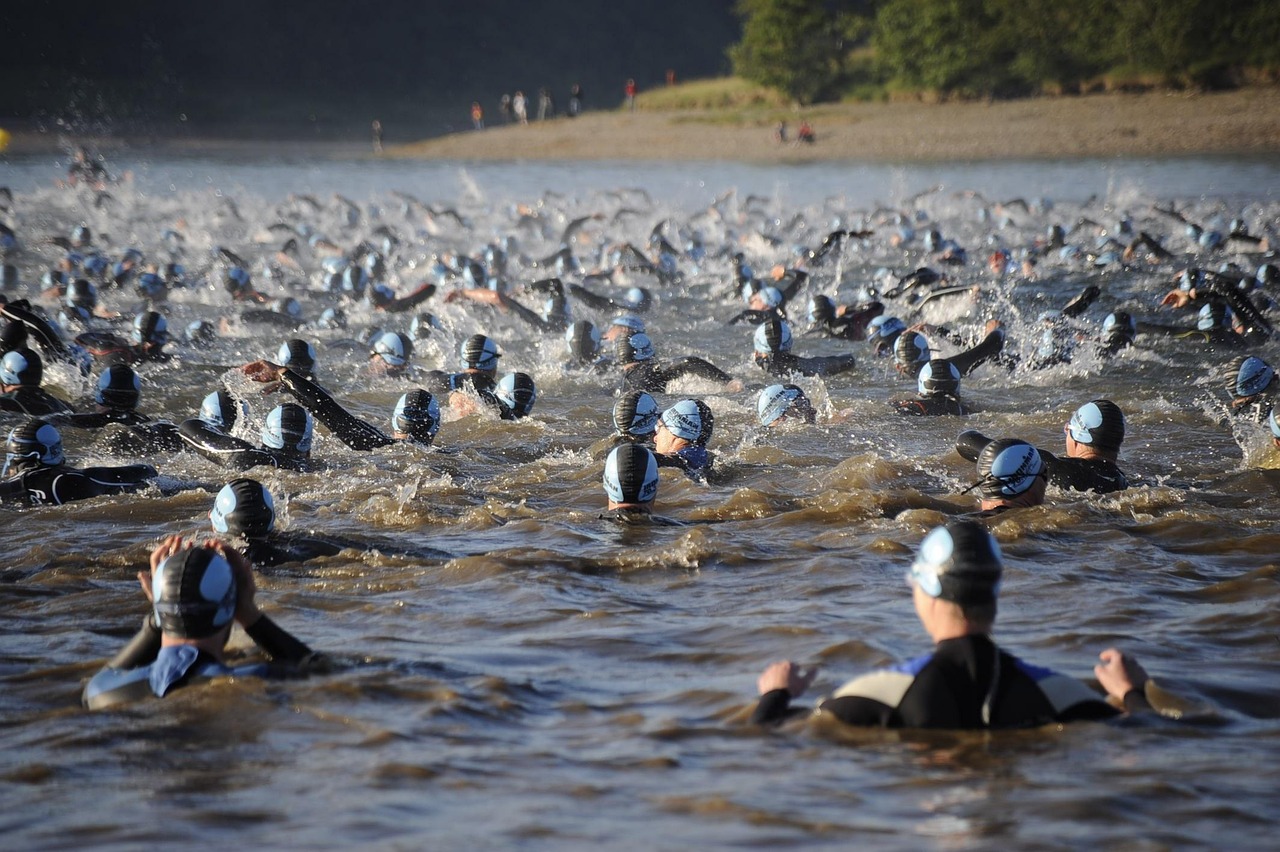
Starting position is crucial for effective swim starts. Depending on whether you’re competing in a wave start or a mass start, your approach may vary. For a wave start, you can position yourself strategically. If you identify as a faster swimmer, it’s best to place yourself near the front. Slower swimmers should aim for the back, which helps avoid congestion. During a mass start, chaos can ensue, making it essential to remain calm and focused. Instead of fighting for space, adopt a technique known as the “dolphin dive” for the initial phase. This involves diving under waves and swimming beneath the surface to avoid turbulence. Maintaining a strong position is vital to executing this well. Use a combination of freestyle strokes and underwater motions to minimize your exposure to choppy waters. Also, consider the angle of your entry into the water; this will further streamline your movement. Good body posture and streamlined position, while entering, will decrease drag. Once in the water, settle into your rhythm as quickly as possible. Establishing a strong, consistent stroke can change the direction of your swim significantly. This can lead to better performance overall.
The Importance of Warm-up
A proper warm-up can dramatically enhance your swim start performance. Consider performing dynamic stretches that activate your core and increase your heart rate. This prepares your muscles for the upcoming exertion, preventing injuries and enhancing overall mobility. Before the swim, allocate time for a water warm-up. Swimming a few laps before the start lets you acclimate to the water temperature and conditions. This simple preparation can provide a psychological edge as well. It can help settle nerves and get you in the right mindset for competition. Incorporating some short sprints can also help enhance your readiness. Practice your techniques for both entry and stroke within this warm-up period. Post-warm-up, focus on your breathing. Take deep, slow breaths to maintain calmness and focus your energy. Positive affirmations about your capabilities can further enhance your mental game. Imagine your successful swim start and visualize yourself executing it flawlessly. Working on your positive self-talk can contribute significantly to your overall confidence. With both mental and physical aspects aligned, you’ll feel more prepared and engaged come race time. Greater focus leads to optimal performance.
During the race, the initial setup is also crucial. Positioning slightly wider than your natural preference can give you a larger area to maneuver when the race begins. This tactical choice will help you avoid unintentional physical contact with other competitors. In constant motion, it’s hard to remain composed, so focus on your rhythm as you enter the water. Emphasize the use of your arms rather than solely relying on your legs for propulsion. A strong upper body will significantly increase your forward momentum. Once submerged, take a moment to settle into your rhythm. Remember to maintain a streamlined position; this means keeping your head down and body aligned horizontally to maximize efficiency. From this spot, focus on extending your strokes and maximizing glide. This can propel you forward much faster than kicks alone would. In addition, breathing techniques should become routine rather than frantic. Proper breathing will give you the stamina to keep pushing through your swim segment. Lastly, commit to keeping your eyes up every now and then; this will help you gauge where to aim and track your competition without disrupting your form.
Consistency in Training
Assessment of your progress is necessary for successful triathlon swimming. Consistency in training is an essential element. Try to swim at least three times a week. This frequency gives you sufficient practice for muscle memory to develop. Diverse training sessions will help avoid burnout. Incorporate technique drills to improve specific aspects of your swim. These can include breathing patterns, kick mechanics, or stroke efficiency. Mix workouts by including interval training and distance swims. Each type of session will develop your overall endurance and stroke mechanics. Collaborating with a coach can further personalize your training. Get specific feedback on your swim performance to identify weaknesses. Documenting your workouts and times can also track improvements. Regularly testing your fitness through open water practices can prepare you for actual race conditions. As you progress, adjust your goals to elevate your performance. Incremental changes can lead to significant improvements. Nutrition also plays a crucial role in training effectiveness. Focusing on a balanced diet can enhance recovery, providing your body with essential nutrients. Ultimately, the best preparation includes structured plans that address all facets of your competitive swimming.
The mental aspect of your swim cannot be overlooked. Triathlons require more than physical capability; mental resilience plays a critical role in your aquatic performance. Preparing for race day includes mental exercises focusing on relaxation techniques. Visualization remains an effective method; imagine yourself swimming efficiently several times. Visualizing your tactics, such as sighting, breathing, and turns, can result in enhanced performance. During training, practice handling difficult situations. Simulating race-like conditions, including crowded starts, will better prepare you for actual scenarios. Another layer is establishing a pre-race routine. This routine helps to ground you in the moment and keeps anxiety at bay. Consider listening to music or performing self-talk just before your entry. Remaining adaptive is essential too. Be prepared to adjust if the race conditions change unexpectedly. Your swim start may require you to rethink the plan at a moment’s notice. This flexibility can help maintain your focus and energy. Coupled with physical prowess, mental toughness can significantly improve your overall swim performance on race day. Remember, a sound mind supports a strong body and facilitates better results.
Final Preparations for Race Day
In the final days leading up to the race, focus on tapering. This weeks’ approach should emphasize rest and recovery. It’s critical for your body to feel fresh and energized. Revisit your training sessions but avoid any strenuous activities. Light swims and gentle stretching during this period can maintain your fitness without overexerting. Ensure all your equipment, including your wetsuit and goggles, are race-ready. Thoroughly check your gear to avoid any last-minute surprises. On race day, eat a light meal and hydrate early enough for gentle digestion. Before the event, arrive early to familiarize yourself with the environment and get comfortable with your surroundings. Participate in the warm-up as discussed earlier; acclimatization is crucial. Follow your established pre-race routine to keep nerves at bay and maintain focus. Lastly, during the swim start, engage all your preparation techniques. Applying everything practiced leads to a confident entry. Trust the hard work that you’ve put in during training. Whether your goal is to improve personal records or simply complete the race, each component plays an essential role in your achievement.